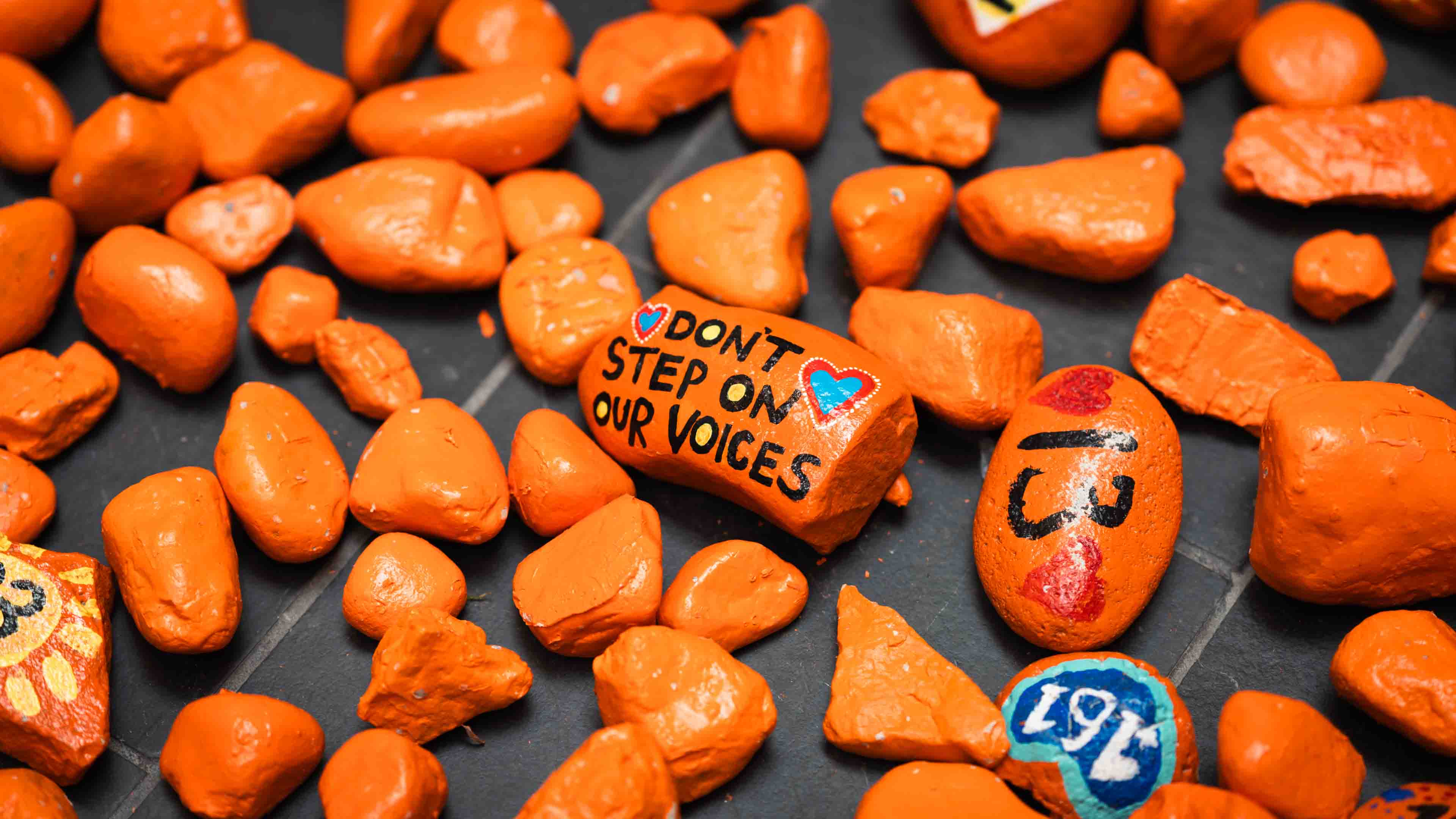
The University of Guelph-Humber (U of GH) community came together for a day of reflection during the National Day for Truth and Reconciliation on Sept. 30, 2026. Through a series of thought-provoking activities, students and staff explored the meaning of reconciliation and honoured the children whose lives were tragically lost due to the horrors of residential schools.
The day honours Indigenous residential school survivors, their families and communities, and the children who never returned home, while providing an opportunity to consider the collective responsibility to advance reconciliation. Indigenous peoples are still grappling with the impacts of the residential school system through grief and intergenerational trauma due to mistreatment, abuse, and the stripping of culture and identity faced at residential schools.
“We have to practice truth and reconciliation every day and even bring it into our private practice,” third-year Psychology student Elizabeth Marculewicz said. “For example, I'm in Psychology, so we have to examine how our [societal] structures are built so that Indigenous people can be included and part of the solution going forward. We also have to reflect on the wrong actions that were committed in the past so that we never repeat them again.”
The day of learning, reflection, and action began with a Sacred Fire lit at sunrise, hosted by Early Childhood Studies Doodoom Aki Curator Hopi Martin and Indigenous Elders at the wiigiwaam (at the Humber Arboretum) to honour the children impacted by residential schools.
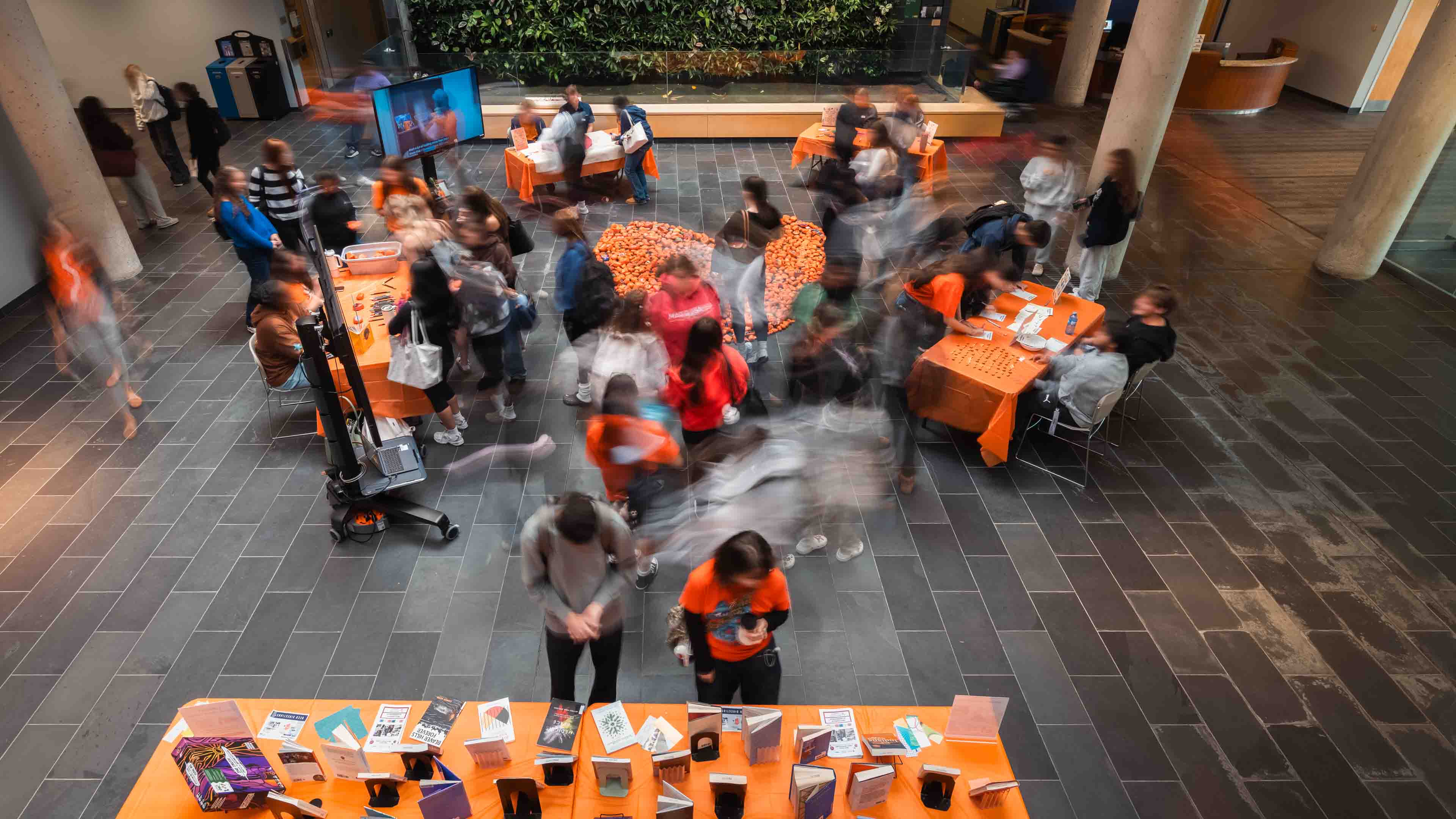
Then in the Guelph-Humber Atrium, four interactive learning stations were set up surrounding a large heart made up of painted orange rocks that represented the children who never returned home.
“As a person who’s [interested in] going into criminal defence law, Truth and Reconciliation is really important to me,” fourth-year Justice Studies student Tala Taha said. “As Gladue reports come in and Indigenous people are getting discriminated against, we want to make them equal, and we don't want to repeat the past.”
NOTE: When there’s an Indigenous offender in the justice system, a Gladue report’s purpose is to point out relevant systemic factors they face that should be considered when sentencing the accused in court. This stems from the 1999 Supreme Court of Canada R. v. Gladue that addressed disproportionally high rates of incarceration among Indigenous peoples.
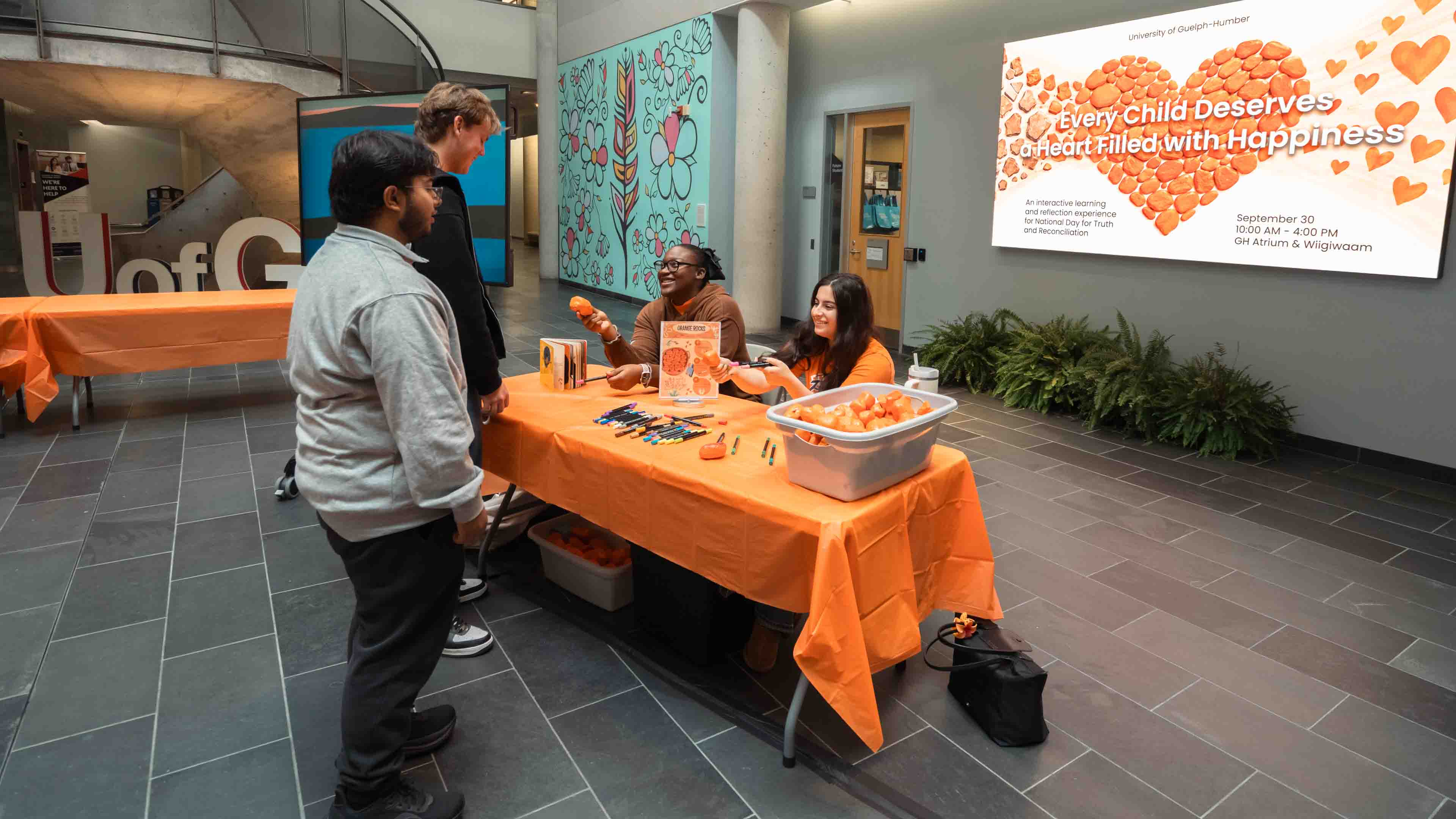
The first station was a rock painting station inspired by My Heart Fills With Happiness, a children’s book by Monique Gray Smith about the things that bring a young Indigenous child joy from her culture. Students were able to read the book and write what brings them happiness on a rock, which they could bring to the wiigiwaam or add to the heart in the Atrium.
The second station gave participants a moment to reflect on the happiness that was taken away from Indigenous children through residential schools. Those who visited the station were invited to write something around an illustration of a broken heart. Here, there was also a short film playing about the history of Orange Shirt Day to inform participants of its origin.
While at the second station, fourth-year Social Services and Well-Being Studies student Evan Tsagouris reflected on what Truth and Reconciliation means to him. He said, “Being like an ally to support Indigenous peoples… and really engaging and taking time to really engage with [educational] material and fighting misconceptions.”
The third station’s activity prompted participants to think about what they can do to fill children’s hearts. Colourful paper hearts were available to write reflections on. Finally, the fourth station invites participants to fill out a ReconciliACTION Passport to ponder what they learned at the stations, and consider how to continue learning and take actionable steps toward reconciliation.
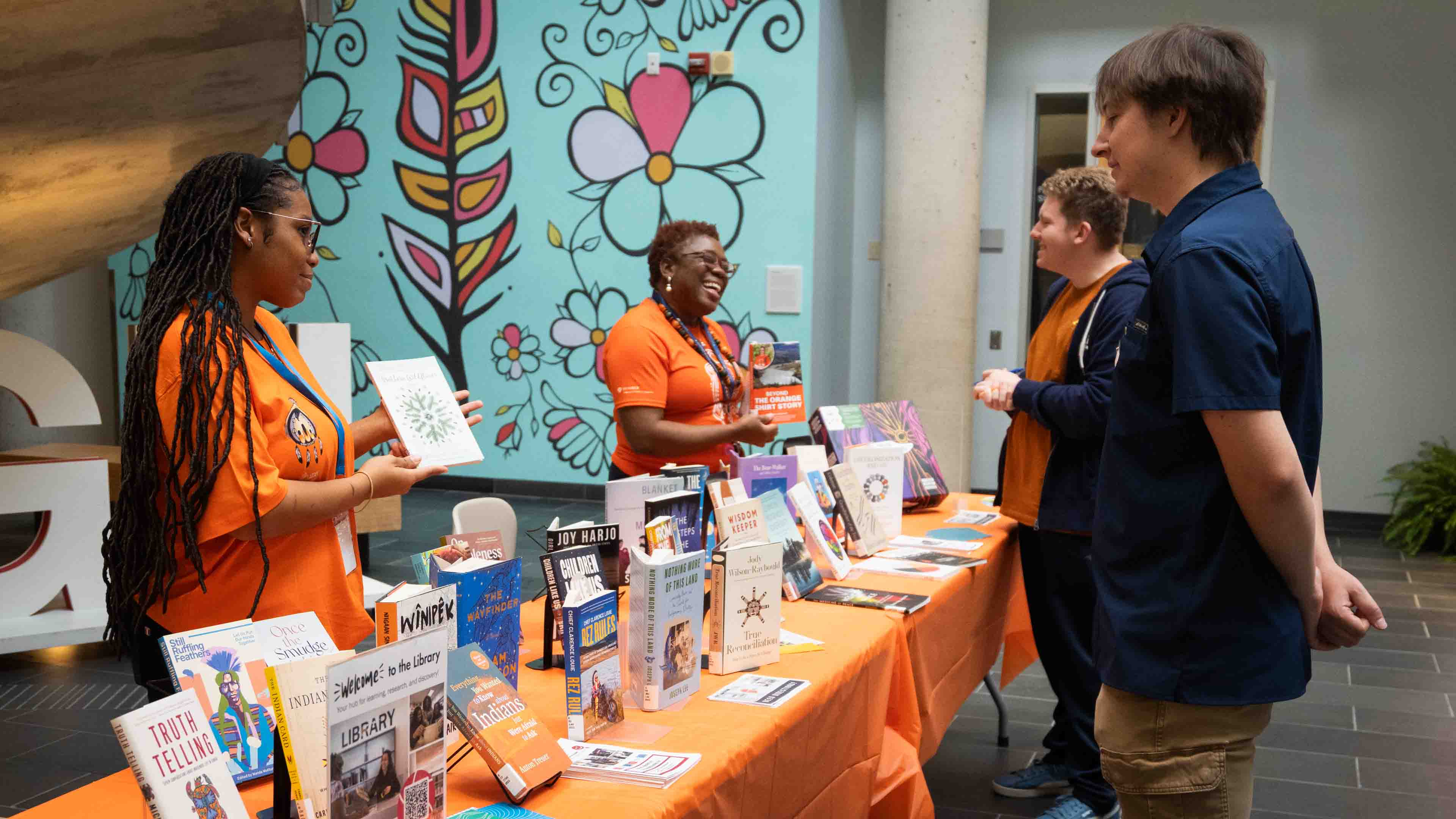
The Humber and Guelph-Humber Library also had a table display connecting the U of GH community with books that feature Indigenous culture, history, and voices.
“To me, [Truth and Reconciliation ] means looking back and bringing to light the hardships that many Indigenous families have been through and recognizing that, then making sure it’s something we don’t reproduce, something we can strive to do better in Canada,” fourth-year Justice Studies student Kyle Weston said, reflecting on the day.
To learn more about Truth and Reconciliation or to find services for Indigenous students on campus, we encourage you to click these links:
Canada’s 94 Truth and Reconciliation calls to action
National Day for Truth and Reconciliation in Ontario
Humber Indigenous Education and Engagement
Humber and Guelph-Humber Library’s Truth and Reconciliation Collection