

A Psychology education from the University of Guelph-Humber (U of GH) opens more doors than you may realize.
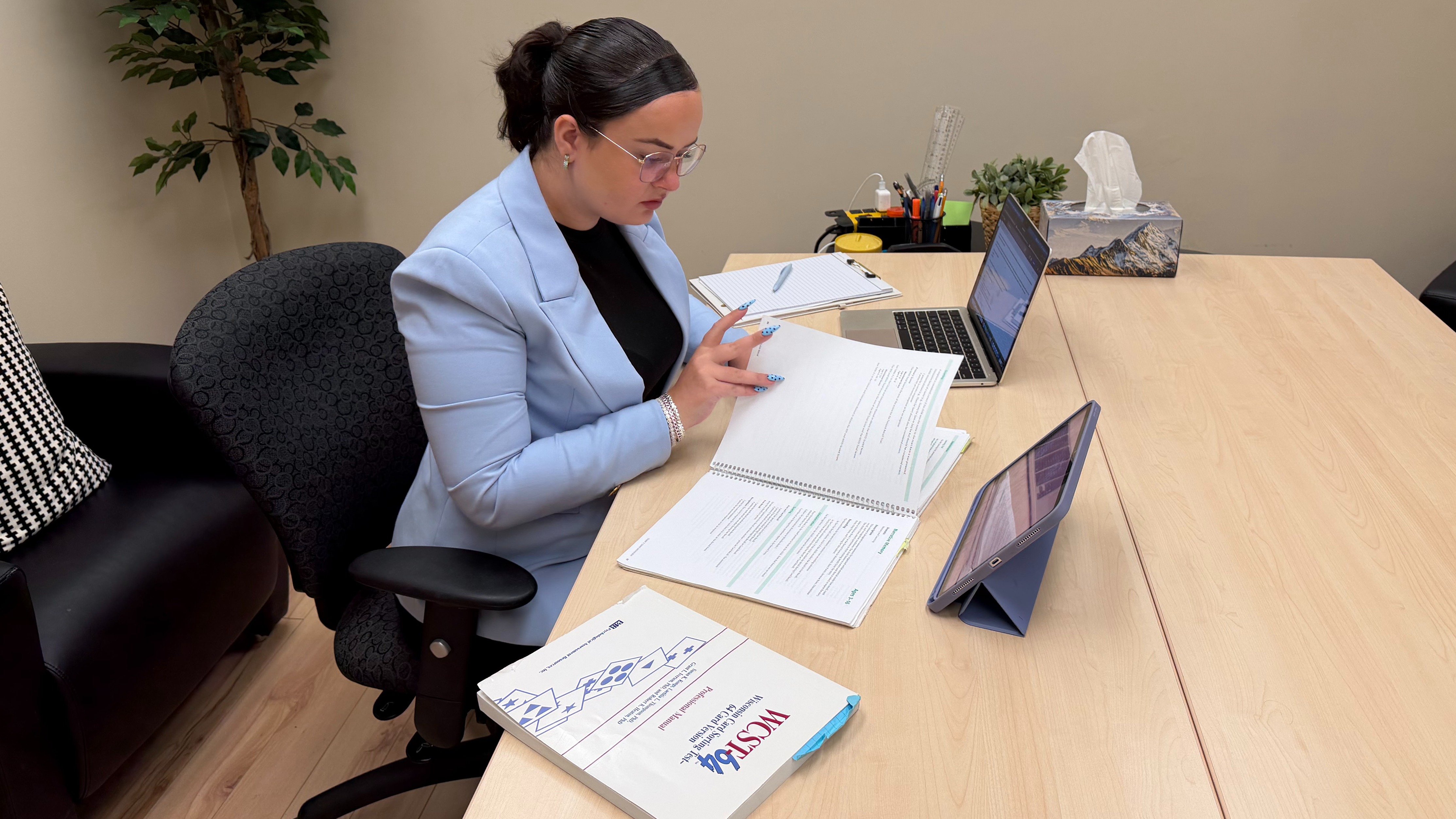
While, yes, career options can include psychotherapy or research, there are other routes that may better suit your aspirations. For instance, U of GH Psychology alum Ciara Connelly (class of 2023) has pursued a career some might not be aware existed – psychometry.
Ciara opened up about her journey from Guelph-Humber, sharing what a psychometrist does and why she’s passionate about the work.
Q: You currently work as a psychometrist. Could you tell us more about what a psychometrist does, for those unfamiliar with the profession?
A: Psychometrists administer and score standardized psychological and neuropsychological tests to clients under the supervision of a licensed psychologist or neuropsychologist. Psychometrists can work in a variety of settings, including clinical assessment, research, hospitals, schools, and other health care or academic settings.
While standardized testing is a crucial part of the role, behavioural observations and other qualitative information gathered throughout the testing process are also important in understanding an individual’s overall functioning.
In my current role at Cornerstone Psychological Services, I work primarily in clinical assessment, where the tests I administer can assess a variety of areas such as cognitive abilities, memory, attention, processing speed, academic skills, language, and other aspects of how an individual thinks, learns, and functions.
Q: What inspired you to pursue this career?
A: To be completely honest, I didn’t know what a psychometrist was when I was completing my degree at Guelph-Humber. After graduating, I initially thought I wanted to pursue frontline mental health work because I knew I wanted a career where I could help people. But after gaining experience in the field, I realized it wasn’t the right fit for me.
I still wanted a career where I could make a difference and support people, just in a different capacity. I started thinking back to the areas of psychology that I had always been passionate about, particularly research and assessment, and that led me back to my undergraduate thesis on sustained attention. While exploring different career options, I came across a psychometrist position and was immediately fascinated by how the role combined my interests in psychology, assessment, research, and working directly with people.
Q: What do you find to be the most interesting element of your role and why?
A: The most interesting part of my role is being able to see how different individuals approach the same tasks and understanding what their performance can tell us about how they think, learn, and process information. I find it especially interesting that no two clients approach an assessment the same way, even when they are completing the same standardized tests. I also enjoy being able to combine the quantitative results from the assessments with my behavioural observations to get a more complete understanding of the individual. It has given me a much deeper appreciation for how psychological assessment can help identify both an individual’s strengths and areas where they may need additional support.
Q: What has been the greatest challenge in your role as a psychometrist and how have you navigated it?
A: One of the greatest challenges has been learning how to balance the standardized nature of testing with the fact that every client who walks through the door is different. While the administration of a test needs to remain consistent, the way I build rapport, provide encouragement, and make someone feel comfortable can be quite different. I’ve learned to pay close attention to each client’s needs and adjust my approach without compromising the standardized procedures of the test. With experience, I’ve become much more confident in navigating that balance and creating an environment where clients can feel comfortable while still ensuring the integrity of the assessment.
Q: As someone once in their shoes, what advice would you share with current Guelph-Humber Psychology students and recent graduates as they navigate their own career paths?
A: The first piece of advice I would give students and recent graduates is not to be afraid to try something, even if they aren’t completely sure it will be the right fit. When I first pursued frontline mental health work and realized it wasn’t the career path for me, I initially felt like I had failed. I remember wondering how something I had been so certain I wanted to pursue as a career could have ended up not being the right fit for me. Looking back, I see that it wasn’t a failure, a mistake, or wasted time; it gave me valuable experience and, just as importantly, helped me understand what I was looking for in a career. That realization gave me the confidence to explore other opportunities, and eventually discover psychometry. I would want to remind my past self that not every path has to work out for it to be valuable. I hope other students and graduates can give themselves that same grace and recognize that sometimes finding the right career means first learning what isn’t right for you.
My second piece of advice is to apply for opportunities even if you don’t meet every qualification listed in the posting. When I applied to my current position at Cornerstone Psychological Services, the posting listed a master’s degree as preferred, but the team saw the value in my undergraduate thesis experience at Guelph-Humber and decided to take a chance on me. You never know what part of your experience might stand out to an employer. Don’t count yourself out before someone else has the chance to see what you bring to the table. Sometimes, the opportunity you think you aren’t qualified for can be the one that opens a door you never expected.
Q: You graduated in 2023 from the Psychology program. In those three years since graduating, what have you grown to miss most about Guelph-Humber?
A: What I’ve grown to miss most about Guelph-Humber is the sense of community. There was something really special about being part of a smaller campus where you could build genuine connections with your professors, classmates, and the people around you. I especially miss the feeling of being surrounded by people who were all working toward their own goals and supporting one another along the way. Since graduating, I’ve realized how much I valued having that close-knit environment and the relationships I built there. It’s something I didn’t fully appreciate until I left, and it’s definitely one of the things I look back on most fondly about my time at Guelph-Humber.