

By Stephanie Ferrante, first-year Early Childhood Studies student
We cannot change the past, but we can refuse to look away." - Stephanie Ferrante
I came to Canada from the Philippines eight years ago, a country that was colonized for 381 years. I grew up with a respect for nature, deep spirituality, and trust in traditional healing, so when I met Indigenous Peoples here, their cultures felt familiar to me, yet I knew almost nothing about their history.
In 2021, I watched the news the night more than 200 Indigenous children were found in a grave at a former residential school. My heart hurt. I wept for days. I could not understand how anyone could do this to children who deserved to learn, play, and be with their families.
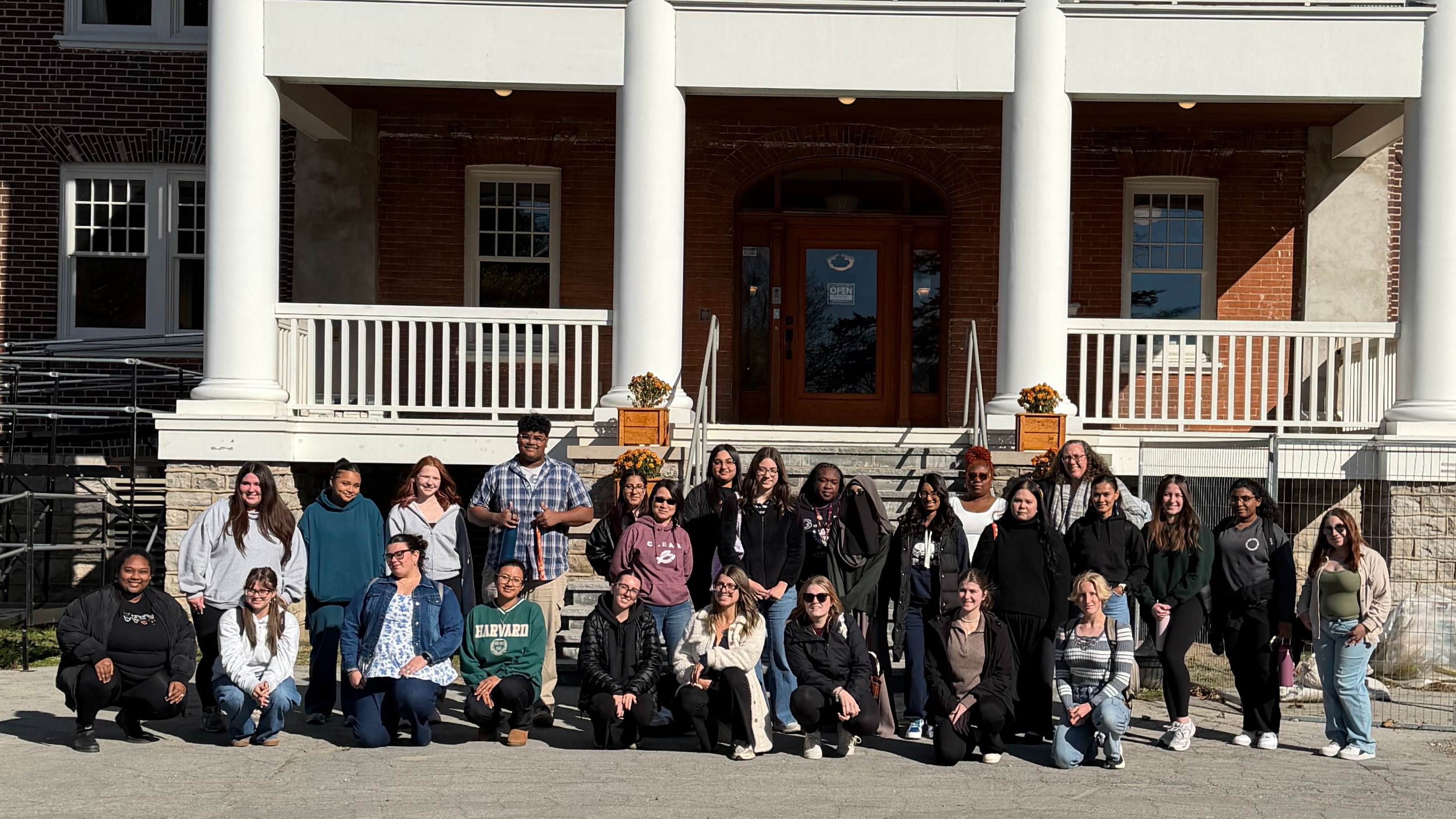
It wasn’t until I visited the Woodland Cultural Centre with the University of Guelph-Humber’s Early Childhood Studies program that I truly felt the weight of what I saw on the news that day. Standing inside this building, the site of the former Mohawk Institute residential school, felt very different. No textbook or documentary could have prepared me for “the punishment room”. I couldn’t even look at it. I could only imagine a child left alone in the dark for hours, maybe days, helpless, not understanding why. In another punishment room, I was told a leather strap was used to lash children, and I felt sick imagining their pain. In the headmaster’s office, I felt angry and disgusted knowing about the abuse that happened there.
Residential schools have closed, but the harm has not ended. Generations of Indigenous families still carry the loss of language, culture, identity, and family connection.
People also overlook Indigenous strength. Communities continue to preserve their cultures, pass down their teachings, and reconnect with their traditions. If we speak only of suffering, we miss their resilience, knowledge, and contributions. Reconciliation is not just acknowledging the past, but it’s also continuous learning, listening to Survivors and Elders, respecting Indigenous perspectives, and taking action every day.
As a future early childhood professional, I believe educators must teach this history honestly and respectfully. We must create spaces where Indigenous children feel safe, valued, and connected to who they are, and where every child learns respect, compassion, and cultural awareness. That means admiring the beautiful patterns of Indigenous clothing, building program plans around traditional crafts, nature-based play, and dances, and listening to and amplifying Indigenous voices.
This kind of experience helps educators shape their future approaches to reconciliation. We can easily read about residential schools and their facts but standing in that building gave me a new responsibility. We are in critical roles that can determine whether Indigenous culture and identity are respected and valued in early childhood settings. An educator who has only read about this history can still approach reconciliation with care and commitment. However, visiting a residential school site can deepen that understanding, strengthening the educator’s intention to carry reconciliation into every plan, every story, and every conversation.
In such a short visit, this experience has shaped my vision for the type of early childhood professional I want to be. My job is not only to provide a safe environment, but it is to protect children’s cultural identities. An Indigenous child will never have to hide who they are in my classroom; I want to encourage them to be proud of themselves as every child should grow up knowing the truth about this land.
I believe that post-secondary schools and early learning programs should make it an essential part of their training for students to learn about Indigenous history, ideally by visiting sites like Woodland Cultural Centre. When the whole educational profession is shaped this way, reconciliation becomes the standard, not the exception.
And it must begin with listening. Amplifying Indigenous voices does not mean speaking for Indigenous Peoples; it means passing them the microphone. This happens when we invite Elders and Knowledge Keepers into our programs, when we fill our shelves with books, music, and art made by Indigenous creators. We should be asking Indigenous families what they want for their children before deciding what we think is best for them. We should speak less, listen more, and act on what we hear.
We cannot change the past, but we can refuse to look away. Indigenous Peoples are extraordinarily strong: they survived what was meant to erase them, and they keep fighting, every day for their voices to be heard. Those children snatched away from their families deserved childhoods full of laughter, language, and love. The least we owe them is to stop leaving their families to fight alone. Let us stand beside them, listen when they speak, and make sure every Indigenous child grows up seen, safe, and proud of who they are.
To learn more about Truth and Reconciliation or to find services for Indigenous students on campus, we encourage you to click these links:
Canada’s 94 Truth and Reconciliation calls to action
Humber Indigenous Education and Engagement
Humber and Guelph-Humber Library’s Truth and Reconciliation Collection