Photo credit: Diego Guillen
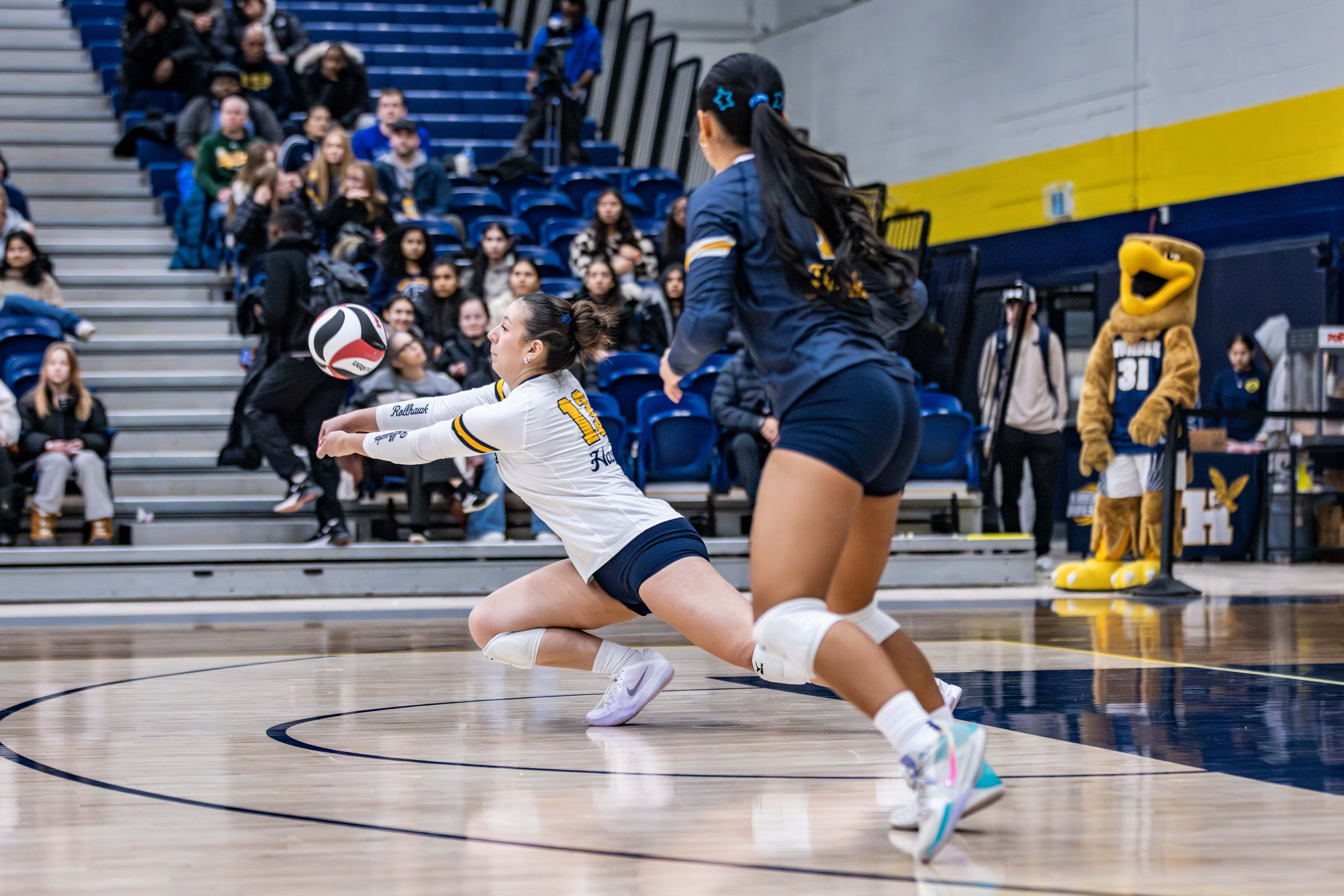
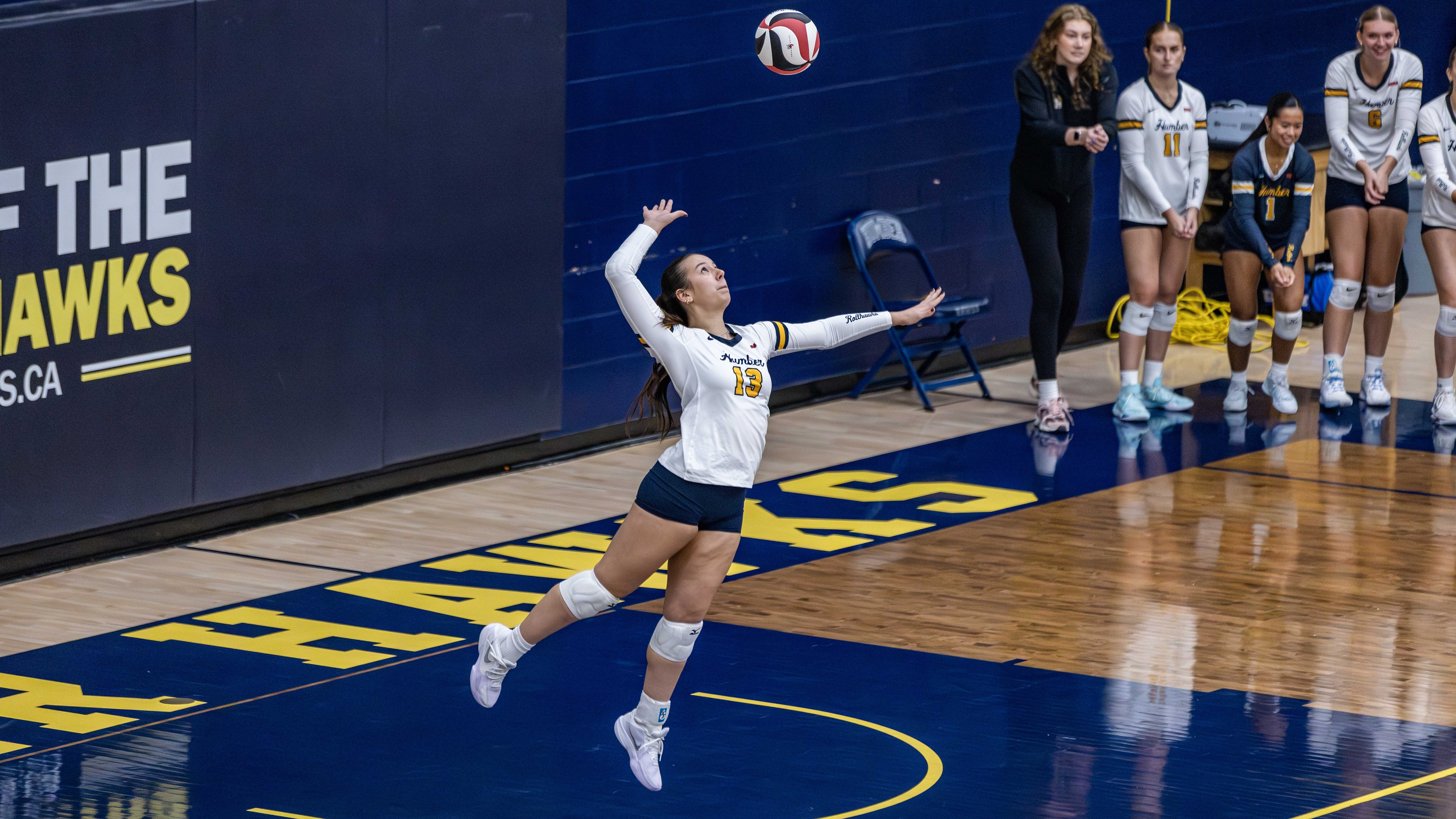
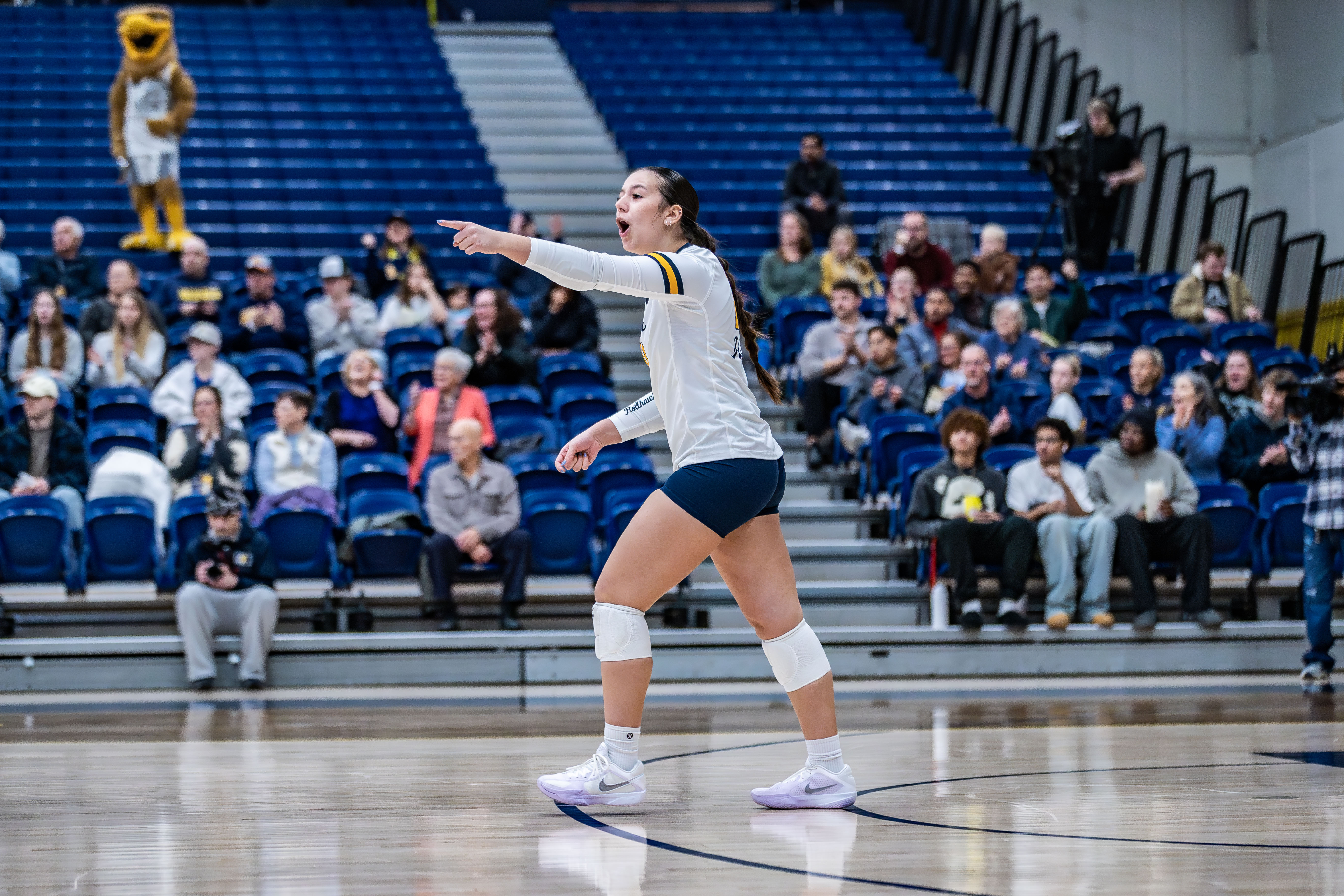
Meet Jiindazay White-Eye. A member of the Chippewas of the Thames First Nation, she’s a University of Guelph-Humber Psychology student going into her third year of study. Outside the classroom, she competes as a student athlete on the Humber Hawks Women’s Volleyball team, playing left side during the 2025-2026 season.
This past season was filled with tremendous highs, including winning the Ontario Championships, as well as challenging moments. To build on the momentum, the team, including Jiindazay, will be training throughout the summer to stay mentally and physically sharp.
Here’s what she had to say about her off-season regimen as a student athlete, the importance of Indigenous representation in sport, and what being on the court has taught her:
Q: The Humber Hawks Women’s Volleyball team had a spectacular 2025-2026 season. What was your most memorable moment?
A: My most memorable moment this past season was winning the Ontario Championships at Seneca Polytechnic. My team had lost the first two sets, which meant the opposing team only needed one more set to win it. We trusted each other and remained confident in our program and our athletes, even when it seemed as though our backs were against the wall. We completed a reverse sweep (winning the game three sets straight after being down two sets), which was extremely rewarding, and easily my favourite memory from the 2025-2026 season.
Q: How will you be physically training and mentally preparing over the summer to keep up the momentum heading into next season with the team?
A: Physically, I am staying consistent in the gym and completing our summer lifting and conditioning program provided by the Humber Performance Centre. I am also competing in the Ontario Elite League this summer, which is a weekly competition against other varsity athletes in the southwestern Ontario region. I will also be attending our team’s summer training camps, which allow our team to come together with the new additions and get used to playing next to each other.
Mentally, I am taking a break from applying pressure on myself to perform. To me, the summer is a time to get back in tune with playing freely and enjoying the process of working on my specific development goals, instead of feeling the pressure to perform to benefit standings.
Q: What’s the hardest part about training for a new season?
A: The hardest part of training for a new season is consistency. The combination of work, living back home, family, and social life can make it difficult to maintain the same schedule as we do during the season. Another difficult aspect is the limited opportunities to train on the court. Gym space is expensive, and competitive weeknight leagues can be tricky to find, which is why training camps hosted by our team are crucial for me to attend throughout the summer.
Q: As an Indigenous student athlete, what does representation in sports mean to you?
A: Representation in sport, to me, looks like athletic programs genuinely supporting and making space for Indigenous voices. I believe Humber Athletics does a good job at bringing awareness to not only Indigenous history but other communities as well. Many teams, both professional and collegiate across Canada, have introduced Indigenous History nights, or dedicated games to highlighting Indigenous movements like Every Child Matters and Missing and Murdered Indigenous Women, Girls, and Two-Spirit people (MMIWG2S). Acts like inviting an Indigenous speaker to educate fans on Indigenous matters creates positive relationships with First Nations communities and emphasizes representation in sport.
Q: What’s the greatest lesson on the court you learned this past season that you will bring with you into the classroom during your third year of the Psychology program?
A: A lesson that I have learned this past season that will translate into the classroom is to persevere through adversity. This season, our team faced its first loss after a 57-match winning streak. It was a difficult pill to swallow for some time; however, the team never gave up on our end goal of winning the Ontario Championships and clinching a ticket to nationals. We continued to practice at a high level, stay committed to our training, and adhere to our mental game in times of struggle. Eventually, our end goal was achieved, even though our journey there did not look the way we planned it.
In the upcoming school year, I anticipate some struggle. Balancing the demands of being a student athlete is no walk in the park. Though I am confident that when I am faced with adversity in the classroom, I have the tools to persevere and commit to achieving the larger goal.
Q: What’s one goal you have as you look ahead to your next season?
A: One goal I have looking toward next season is a medal finish at Nationals. During my first season at Humber, we competed in the national final and left with silver. Last season, we unfortunately came up short of a medal match. In the upcoming season, I hope to see our team back at the national final playing for a gold medal. This [volleyball] program deserves it. There are many milestones to hit before that match, but this goal will remain in the back of my mind throughout next season.
Q: What are your top three hype songs to listen to during team practice or a training session?
A: I like to switch up the songs I listen to before games because I try not to create superstitions. My top three hype songs by the end of last season to listen to during warm-up or in the team room before a game were: Right Above It by Lil Wayne and Drake, HIGHJACK by ASAP Rocky, and TORE UP by Don Toliver.
Students at the University of Guelph-Humber have the option to play sports with the Humber Hawks (Humber Polytechnic) in the Ontario Collegiate Athletic Association (OCAA) or the Guelph Gryphons (University of Guelph) in the Ontario University Athletics (OUA). Learn more about athletics and fitness at U of GH here.