

Kinesiology students work with Psychology students through on-campus placement in this interprofessional course
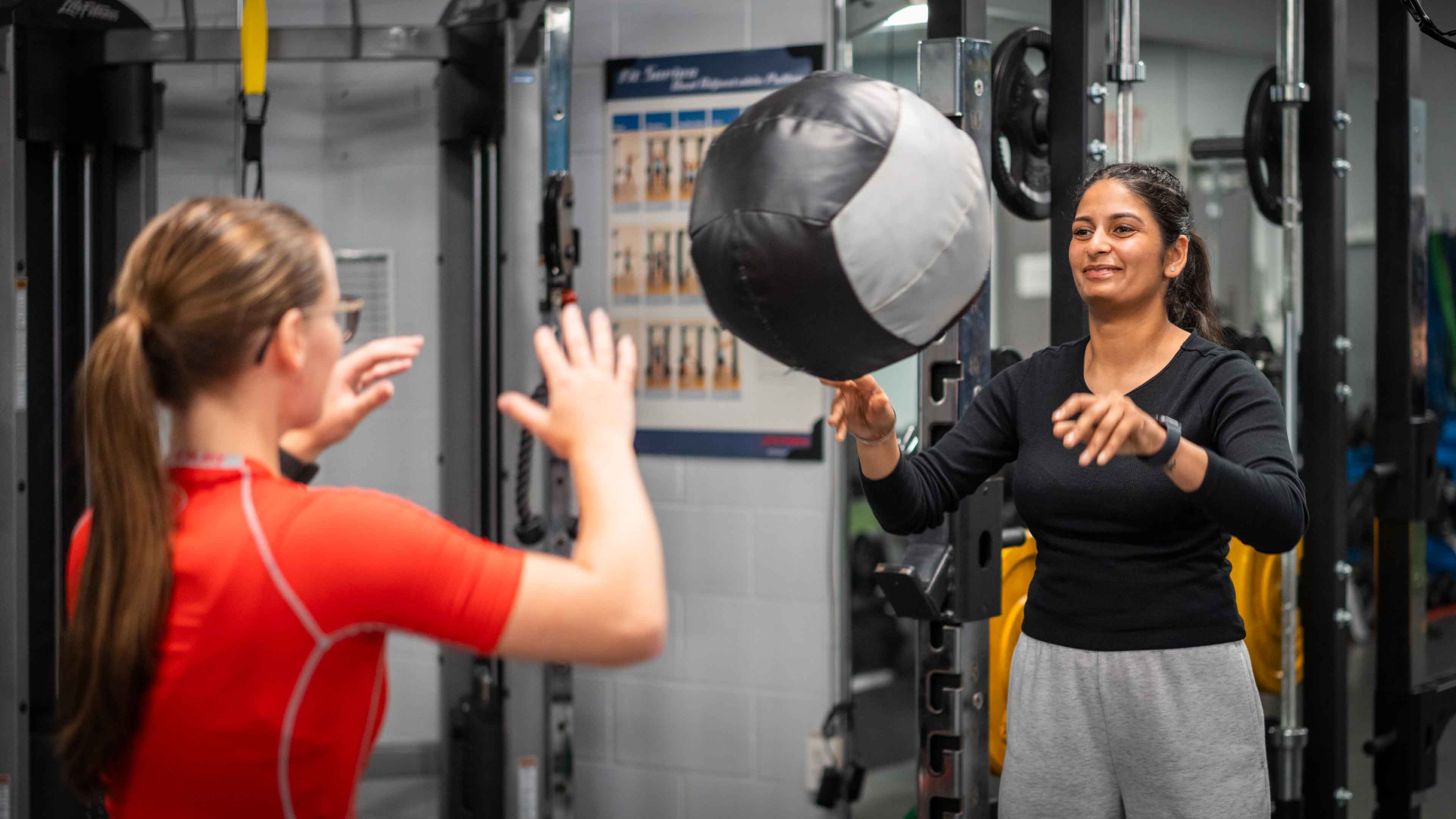
At the University of Guelph-Humber (U of GH), students are learning about the mind-body connection by participating in physical and mental assessments in a new Psychology honours seminar course, Mind and Body, developed and taught by Psychology Chair Dr. Alice Kim.
This involved close collaboration between Psychology students taking the course and Kinesiology students who were completing their on-campus field placements, making this an interprofessional approach to learning. During the course, Kinesiology students were paired up with Psychology students to serve as their fitness trainers. Psychology students reflected on their training experience by assessing their mental states before, during, and after they exercised.
“I did not realize just how involved the mind is when it comes to exercising,” Psychology student Amanda Wrobel said, who took the course during her final semester at U of GH. “[I learned with exercise] you are more productive, you feel better, you feel more motivated. I found it also helps me regulate my emotions.”
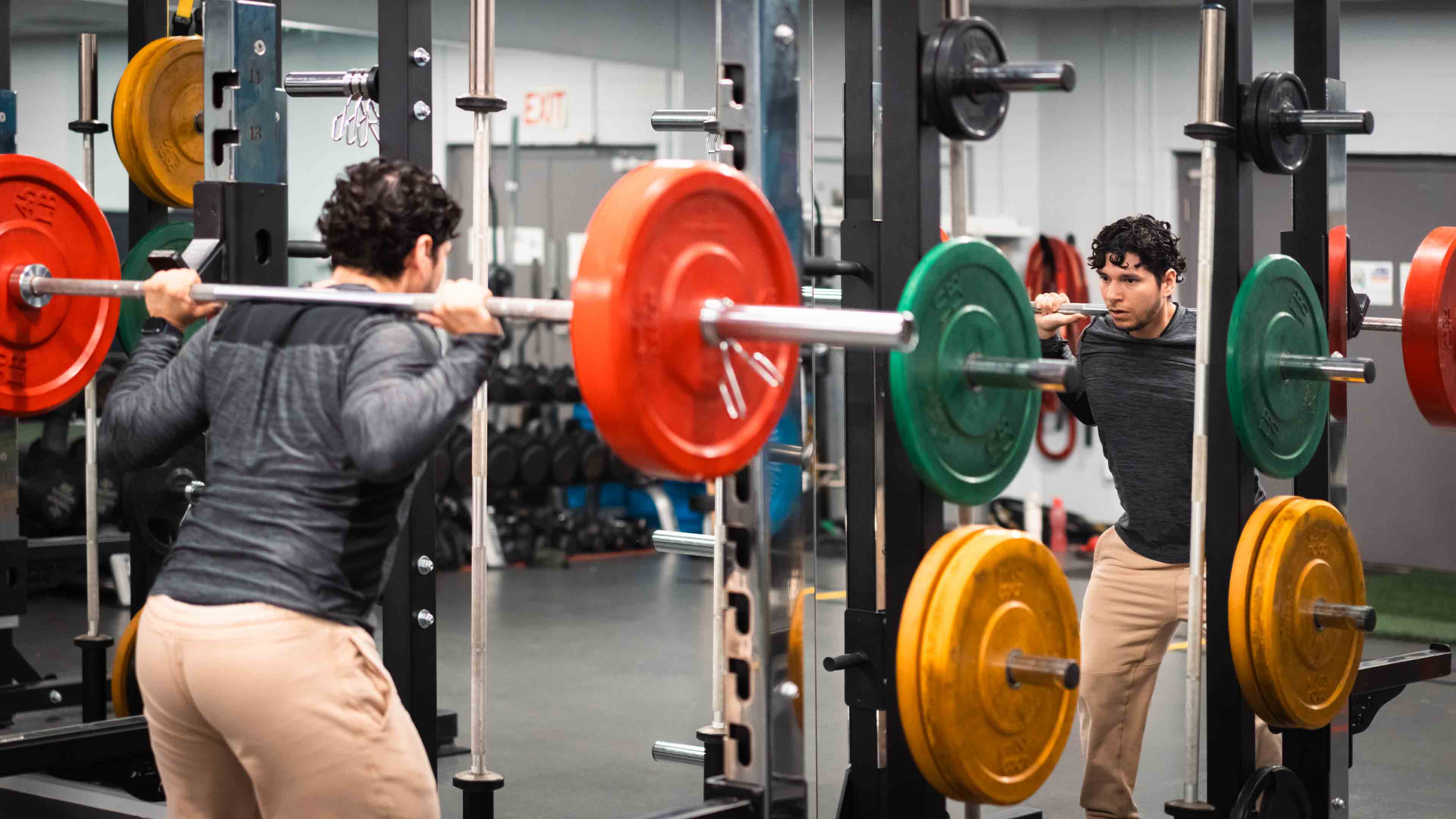
During a training session, Wrobel was told to perform Romanian deadlifts, a strength exercise targeting the glutes and hamstrings. While doing so, she was guided to consciously maintain proper form and to remember to breathe. Her trainer then guided her in a one-rep max test to determine how much weight Wrobel could lift in a single repetition of the movement. She said her trainer used analogies that helped her understand how to move, such as imagining a rubber band around your waist pulling you. This illustrated just how much thought goes into making intentional movements in fitness and regulating the body.
Course Registered Kinesiologist (R. Kin) and exercise training liaison Jacob Farjou said the interdisciplinary nature of this course was a success.
“This collaboration provided an opportunity for third-year Kinesiology students to apply their knowledge in a real-world setting by designing and leading exercise sessions for Psychology students. Through this experience, they developed practical skills in exercise instruction, communication, and adapting physical activity programs to individual needs,” Farjou said.
Regarding the cognitive element of the course, when conducting mental performance assessments, the Psychology students answered questions using the “Five Pillars of HeadSet” about resilience, self-awareness, regulation, motivation, and self-confidence. These were developed by HeadSet Sports through U of GH Kinesiology instructor Dr. Peter Papadogiannis. For example, students were asked how often they used positive self-talk to push through an exercise session.
Moreover, there were questions incorporating the “Five Factor Model,” which called on Psychology students to measure their openness to experience, conscientiousness, extraversion, agreeableness, and neuroticism.
Wrobel found that after exercising, her extroversion levels increased, as did her motivation levels and ability to regulate her mood. Based on these observations, her next task was to write a paper reflecting on her personal evaluations, tying theory into the practice.
“The course also reinforced the connection between physical activity and mental well-being, allowing students to observe firsthand how movement can influence mood, stress management, and overall psychological health. By collaborating across disciplines, students gained a deeper appreciation for the interconnected nature of physical and mental health,” Farjou said.
Some students even developed healthy habits that they could carry for life in addition to gaining an enlightening learning experience. Wrobel said the Mind and Body course inspired her to continue going to the gym for a strong body and mind.
Flex your potential and discover how the University of Guelph-Humber’s Psychology and Kinesiology programs can help you build a strong foundation for your future.