

These workshops aim to provide a safe space to increase neurodiversity awareness, open dialogue
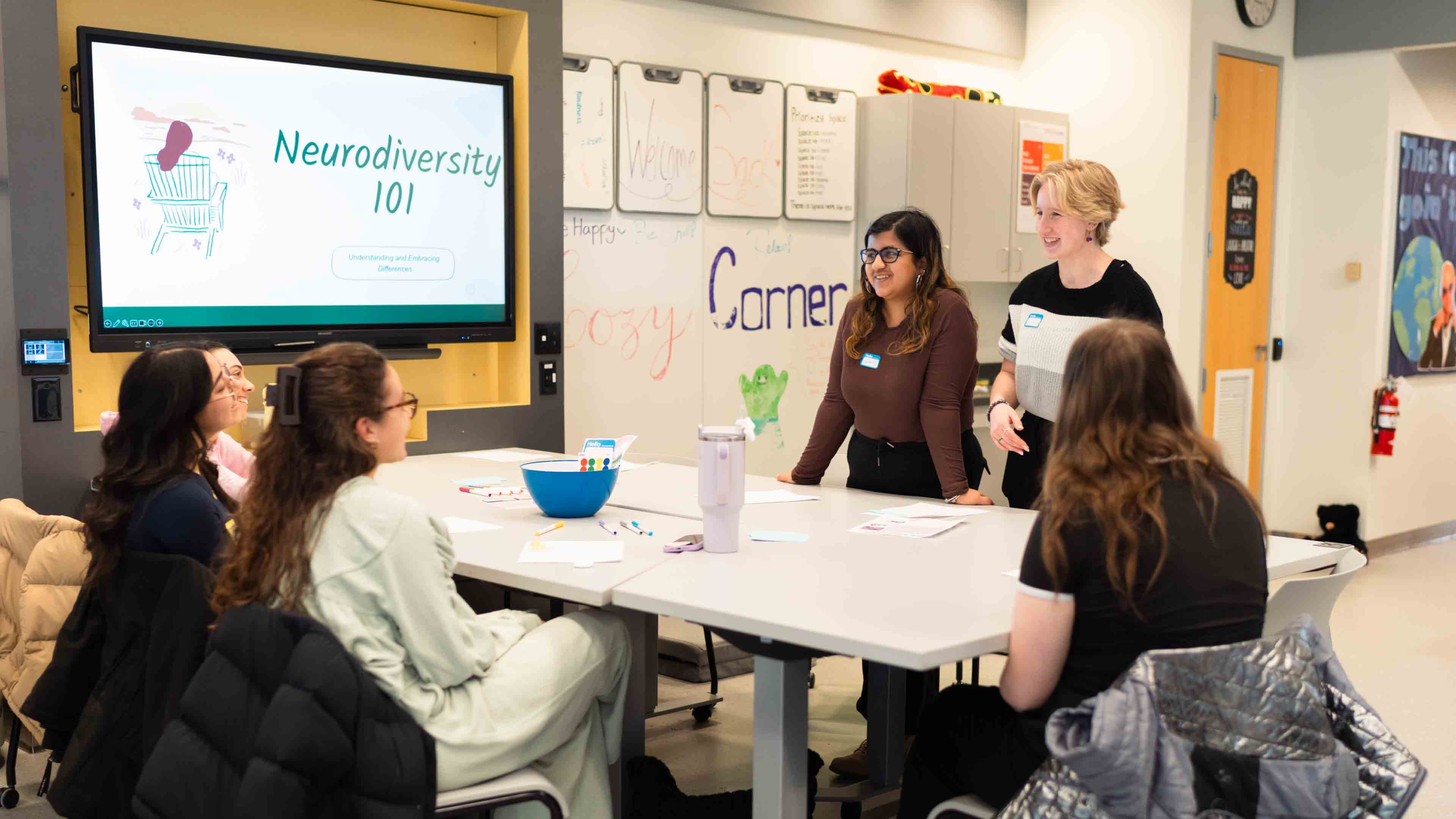
Students at the University of Guelph-Humber (U of GH) are learning about neurodiversity – the differences in how people’s brains operate – through a new series of workshops called “Neurodiverse Voices: Workshops and Peer Engagement.”
Hosted by the Early Childhood Studies (ECS) program but open to all students, this series of six drop-in workshops taking place over the Winter 2026 semester functions as a safe space for students to learn about neurodivergent minds (such as those with autism, ADHD, etc.) and neurotypical minds.
The program’s Interim Chair, Dr. Elena Merenda, said the goal is to increase awareness of neurodiversity, provide practical tools for success, and create a supportive peer network that continues beyond the workshops. The initiative received funding from the University of Guelph’s Equity, Diversity & Inclusion Enhancement Fund.
“I work with a lot of children who are neurodiverse, and I have a lot of friends who are neurodivergent. I really wanted to learn more about how to support them,” third-year ECS student and participant Megan Allen said. “It was an opportunity to learn, to grow, and to educate myself on something that I'll see for the rest of my life [when working with children].”
The workshops are led by students, and topics include understanding different ways of thinking, what it’s like to be neurodivergent, confident self-advocacy, and tips for functioning with a neurodiverse brain. Participants who complete the workshops also receive a certificate of completion.
First-year Justice Studies student Jaliya Medeiros said that she chose to attend the workshops because she wanted to feel involved in the U of GH community, gain an understanding of how neurodivergent minds think, and even learn about herself. She values that the space feels “judgement-free,” so students can express themselves and ask questions freely.
Allen said the workshops are important because they teach students to be inclusive of everyone.
“If we don't understand the way that a neurodivergent person’s brain works, we're not going to be able to support them in the way that works best for them,” she said. “It’s all about inclusion and making sure everyone feels welcome, and like they have a sense of belonging and community here at the school.”
Nandita Sarin, an Early Childhood Studies student who helped host the event and identifies as neurodivergent, said that facilitating the workshops gives her the opportunity to share her lived experiences in a supportive way, allowing her and other students to feel seen and valued, and like they truly belong.
“I found this experience deeply rewarding because many neurodivergent students struggle to ask for help, and I want to be a mentor who reminds them that labels or paperwork never define who they are – their individuality, strengths, and dreams do,” Sarin said.
For those hesitant or shy to join, Allen recommended “taking the risk” to try something new. During these workshops, there’s no pressure to share lived experiences; there’s an option to simply observe. Medeiros echoed this sentiment and said to “get out of your comfort zone.” She also enjoyed meeting new people from U of GH at Neurodiverse Voices.
“By the end of joining the workshop, you'll make at least one friend. And trust me, I will be that friend,” Medeiros said.
All remaining Neurodiverse Voices: Workshops and Peer Engagement sessions will take place from 10:45 a.m. – 12:15 p.m. on the following dates:
- Drop-in session: Feb. 25 , 2026, in GH 123
- Executive Functioning: March 4, 2026, in GH 319
- Drop-in session: March 18, 2026, in GH 319
- Guest speaker: April 1, 2026, in GH 319
- Self-Advocacy Without Apology: April 8, 2026, in GH 319