Written by Business Administration student Maya Ostrom

Experiences like this reveal something important about learning. Case competitions push students to wrestle with real problems, defend their ideas under pressure, and rely on the people sitting beside them." — Maya Ostrom
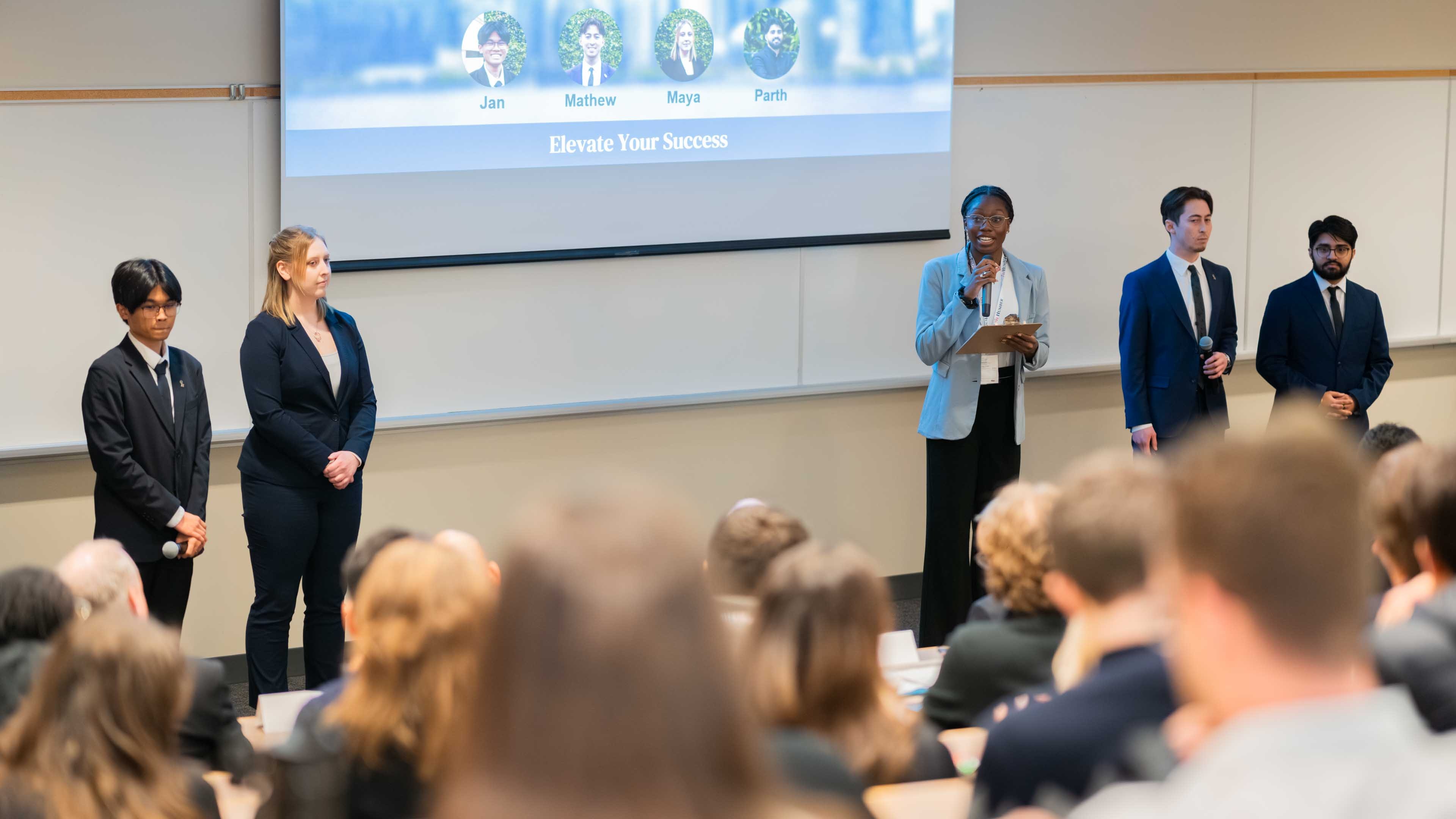
As a competitor on Guelph-Humber’s 30th NIBS Worldwide Case Competition team, I could feel the energy coursing through the packed room ahead of our final presentation. When the door opened and the audience began to clap, a rush of adrenaline took over. It was the kind of moment that feels overwhelming and calm at the same time, one that I will never forget. Months of preparation had led to this.
The NIBS Worldwide Case Competition brought together undergraduate teams from across the world to solve real business problems under intense time pressure. Teams received written cases, analyzed the challenges facing the organization, and presented their recommendations to panels of judges. Sixteen universities from four continents competed in this year’s championship round, hosted at the University of Guelph-Humber.
But the real story started months earlier.
My teammates and I hadn’t competed in this style of case competition before. When we attempted our first practice case in November, the result was rough. The steep learning curve became apparent. What we quickly realized was that case competitions are about learning how to think through problems under pressure as a team and being confident enough to defend your thinking. Preparation intensified quickly, slide templates changed repeatedly, roles became clearer, and practice cases became longer.
Our coaches challenged everything. Some practices stretched eight to ten hours as we tried to improve even small parts of our process. It was exhausting and it was the most difficult challenge I had ever faced.
By the time the championship round began during NIBS 2026, we were ready to test ourselves.
Our team had spent the first night organizing and completing some last-minute research. Even with all that preparation, the nerves were real.
The next morning, we walked into the preparation room for our first case. Four hours disappeared faster than we expected. With ten minutes left, we were scrambling to consolidate slides from four laptops onto a single USB drive before the deadline.
Then the results came back – six to five. We had won. That moment shifted my mindset. The competition stopped feeling like something we were trying to survive, and started feeling like something we could compete in. For the first time, it felt like we belonged there.
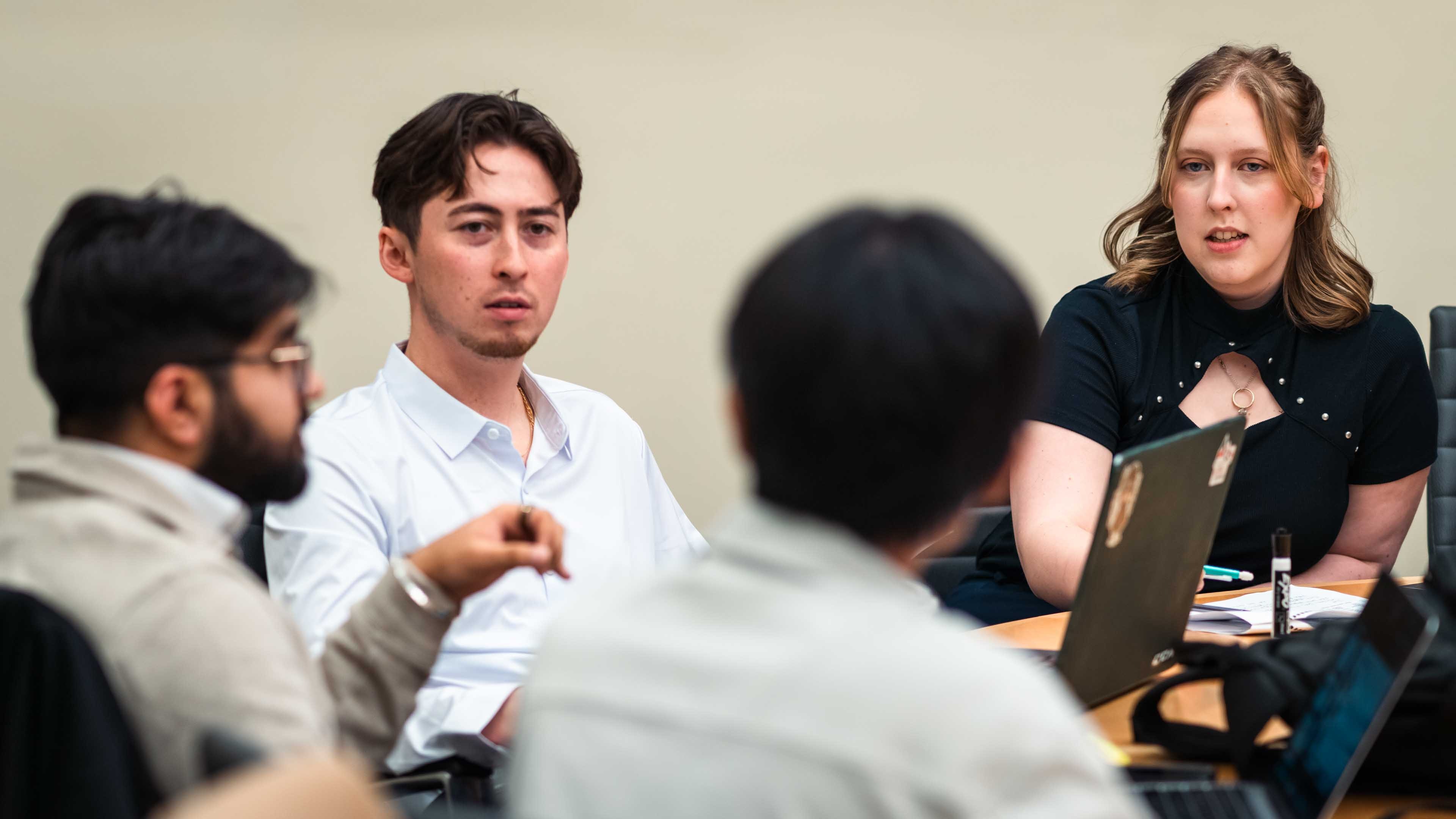
The following morning brought round three and our first loss. It was a close match, but that single point dropped us from first place in our division to second. It also meant in the semi-finals, we would face Bishop’s University – a team whose presentation had impressed us the day before. We only had a few hours before heading back into the preparation room. At that point we were strategizing once again, we had to take a risk to stand out.
For the semi-finals case, we proposed something unconventional. What if the company hosted its own case competition to generate excitement and community engagement? It was risky, but when the presentation ended, we knew we had delivered something memorable. Both teams were called back in to hear the result.
Six to five, Guelph-Humber. For a moment everything froze. Then it hit me. We had just secured a spot in the finals.
The following day gave everyone a short break from the pressure. Competitors shared lunch together at the Old Spaghetti Factory and visited the CN Tower. For a few hours, we were simply students meeting peers from around the world. Then that evening, preparation started again.
The final case began early the next morning with six hours to prepare before presenting in front of the entire competition audience. The case focused on Disney and the challenges surrounding its organizational structure, portfolio strategy, and brand fatigue.
Our theme was simple: bring back the magic.
Our main idea was integrating a generative storytelling feature into Disney+ that would allow audiences to create their own stories using classic Disney characters. We managed one quick practice run before time expired. It was far from perfect. Soon after, we were escorted downstairs and asked to wait outside the presentation room, and upon entering, the audience clapped. It felt surreal.
Once the presentation began, the nerves disappeared. Fifteen minutes passed quickly, followed by ten minutes of questions and that was it. When it ended, everything rushed back into focus. And I knew we had just delivered the best presentation we had done all week. Later that evening, at the closing ceremony, our team placed third in the world.
Considering where we had started, the result felt unbelievable. Through long days, late nights, and relentless feedback from our coaches, we slowly improved. Confidence replaced hesitation. Experiences like this reveal something important about learning. Case competitions push students to wrestle with real problems, defend their ideas under pressure, and rely on the people sitting beside them.
Though right before entering the room for finals, I realized something I wish I had understood at the beginning: the most important moment was never the final score. It was realizing how much we had grown. Only months earlier we were struggling to piece together our first case. Now we were about to present on the world stage.
And in that moment, it was clear that the journey from that first unfinished presentation to the finals had already been the real victory.
Written by Business Administration student Maya Ostrom