

Final-year students presented their experiences, lessons learned from field placement during Field Reflection and Readiness Day
University of Guelph-Humber (U of GH) Community Social Services (CSS) students in their final year came together for the second-annual Field Reflection and Readiness Day, which illustrated the multitude of career paths students could pursue, and the vast scope of areas students learn about in the program.
Students in the CSS program (known as Social Services & Well-Being Studies starting Fall 2026) gain valuable experiences in the field throughout placements. From addressing barriers in community service delivery, to managing the needs of ageing adults, to providing trauma-informed youth care, and more, these experiences are as diverse as the graduate school and career pathways the program supports, preparing students for success. Students have the opportunity for three placements throughout the program starting in second year, culminating with a two-semester Advanced Practicum placement in fourth year. In these placements, students apply what they learn in the classroom and shadow professionals on the job.
This year’s Field Reflection and Readiness Day theme was “Practice Philosophies,” supporting students in developing guiding principles, ethics, beliefs, and values in professional practice. The event included an alumni panel, a reflection activity, and a luncheon where students were able to connect with one another.
“The event captures the breadth of the field, and the various skills and experiences that students require to develop their own practice philosophies,” Chair Dr. Olivia Boukydis said. “My research area is entirely about preparedness for practice, which is how Field Reflection and Readiness came to be and how I intend to continue to inform our curriculum.”
Here are some notable placement takeaways that CSS students showcased during Field Reflection & Readiness Day:
The Kerr Street Mission
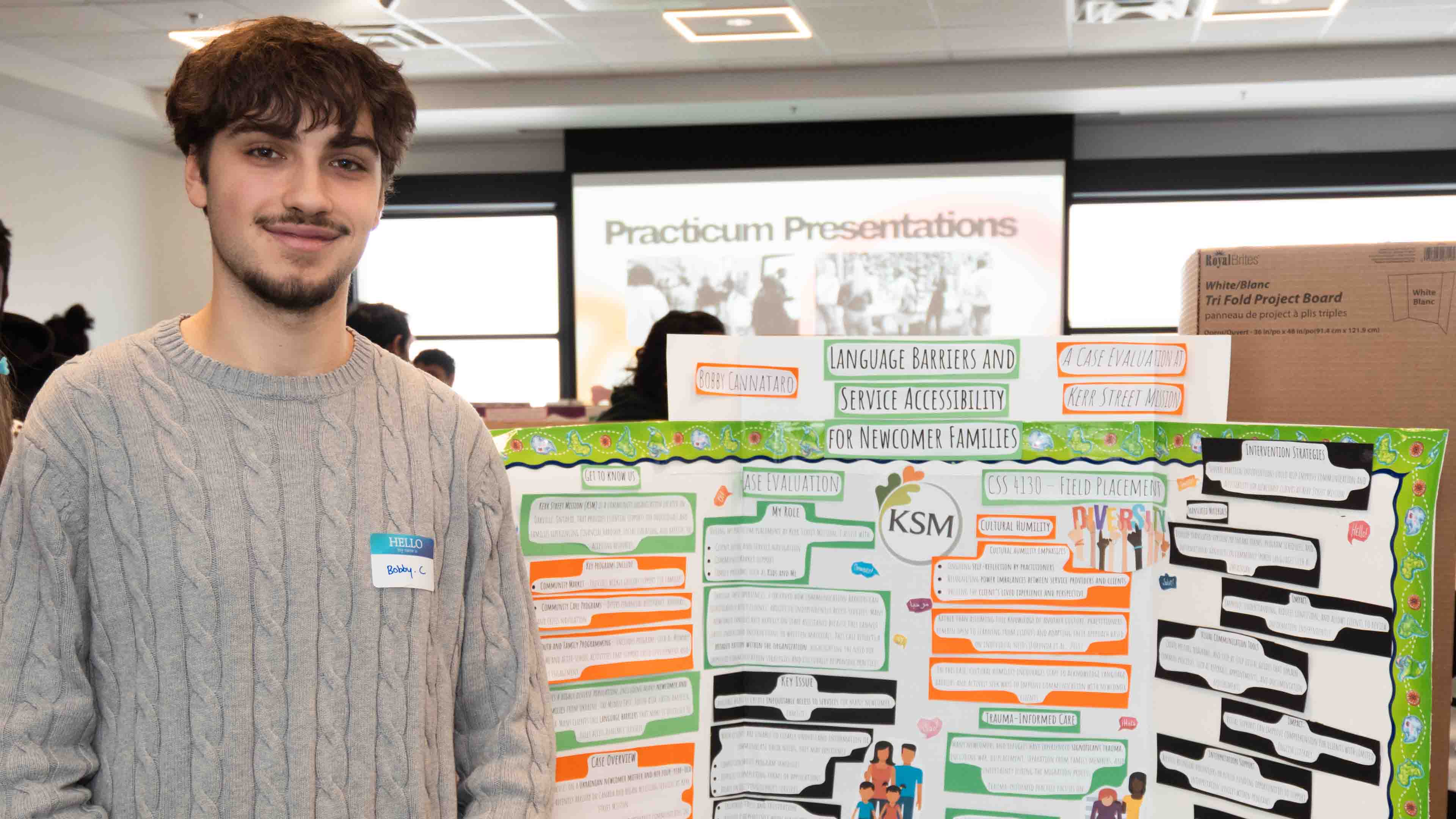
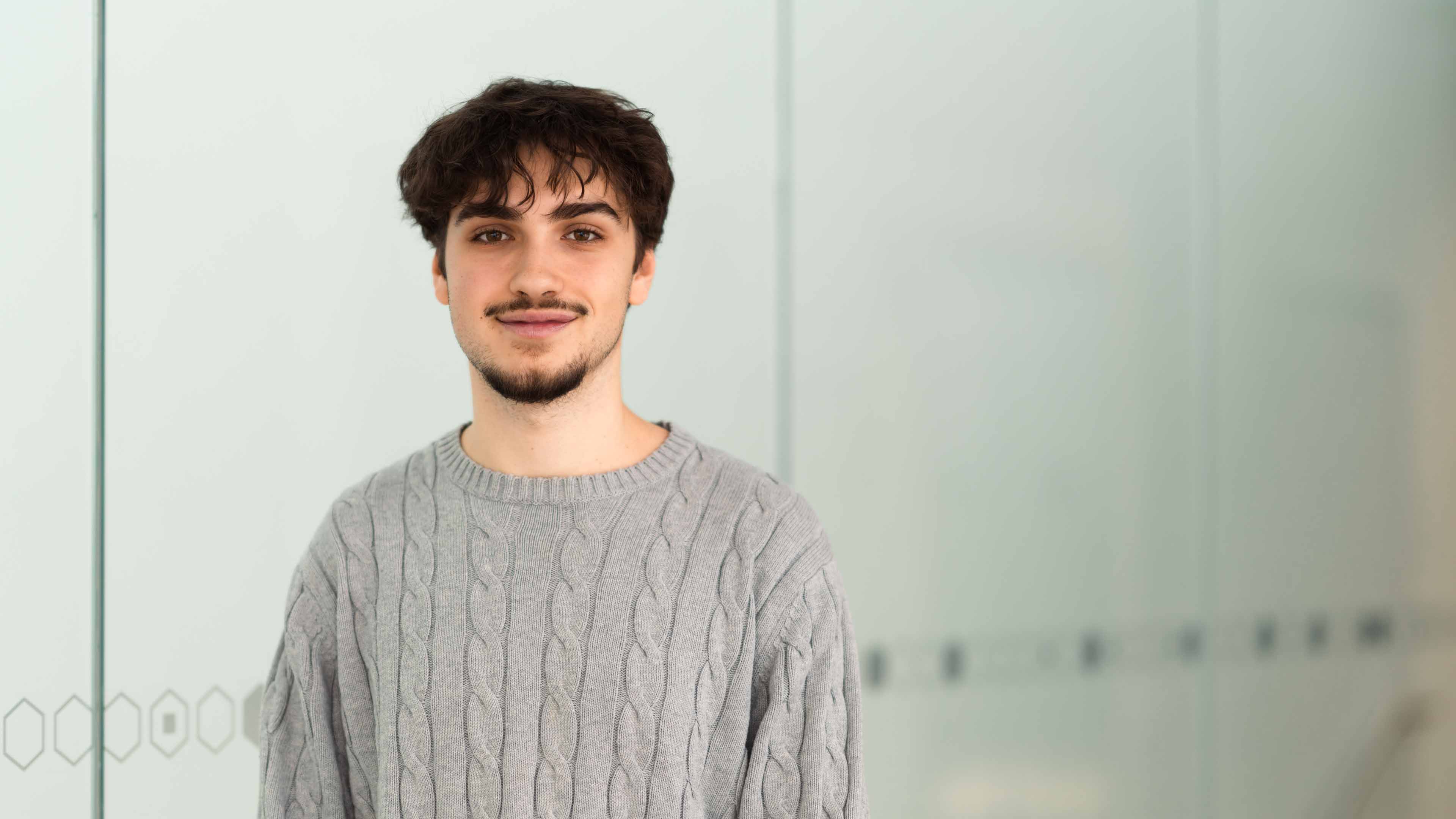
Bobby Cannataro completed his fourth-year placement at the Kerr Street Mission. His experience was about the way language barriers could impact service delivery in the community.
Cannataro’s focus of the placement was a case where a Ukrainian refugee and her child came to the Kerr Street Mission but spoke very little English. The four-year-old child was non-verbal, which sparked concern for developmental practitioners. Cannataro saw how the cultural and language barriers made it challenging to deliver the necessary supports.
This placement gave him insight on child development, the need for giving parents spaces to meet with fellow community members, and the importance of community connection, especially newcomers in Canada. Whether it’s de-escalating a tense situation or giving support to a distressed client, being able to observe professionals in a variety of scenarios allowed Canntaro to feel more comfortable in serving others.
“Seeing that first-hand was a huge help for me because going into placement, I was very worried about how I was going to handle [those scenarios],” he said. “One thing that was difficult for me was creating relationships with people, and I think meeting people and being able to practice that, I saw a huge growth in myself because of my placement.”
Furthermore, he noted that having two placements in previous years of study allowed him to feel prepared for this final program placement. Cannataro added that he appreciates being able to take courses throughout his four years in the CSS program in different areas – seniors, youth, families, and mental health and additions – giving the ability to discover his niche.
The Neighbourhood Group
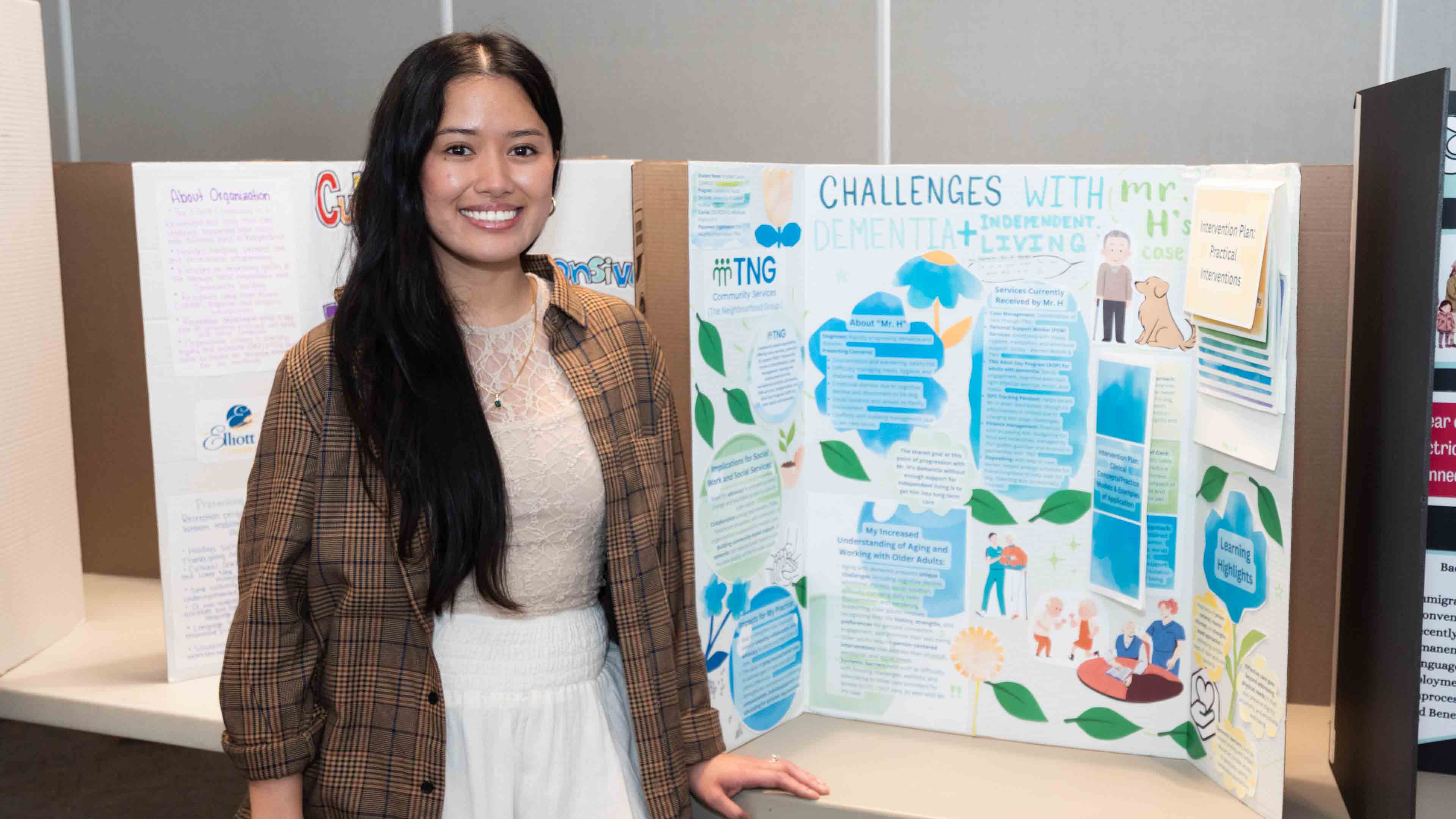
Krystael Castro’s placement with the Neighbourhood Group allowed her to explore the process of supporting adults ageing independently at home who require complex care. This placement was clinical in nature, as she observed the treatment of real patients.
During her placement, Castro visited clients alongside the professionals. Specifically, she was assigned to a client who she called “Mr. H.” People she visited, like Mr. H, were often frail and required more services and supports to age at home.
For instance, Castro said if they assess someone who requires long-term care, it’s up to the professionals at the Neighbourhood Group to advocate for what’s best for the patient. Advocacy work might also include securing mobility aids if required – it’s about speaking up for their needs. Plus, the placement also exposed Castrol to the process of applying for grants.
“The placement reaffirmed the need to approach everyone with empathy and compassion, to understand where they're coming from and to get to know them as a person in order to best support them,” she said.
Castro said her years in the CSS program “definitely prepared” her for this opportunity, especially group discussions held during her practicum courses. Hearing different perspectives allowed her to learn from her peers’ lived experiences in their own placements – some quite different from her own. This gave her insight into what working could look like for her once she graduates, she said.
My Neighbourhood Services, Empowered Essence program
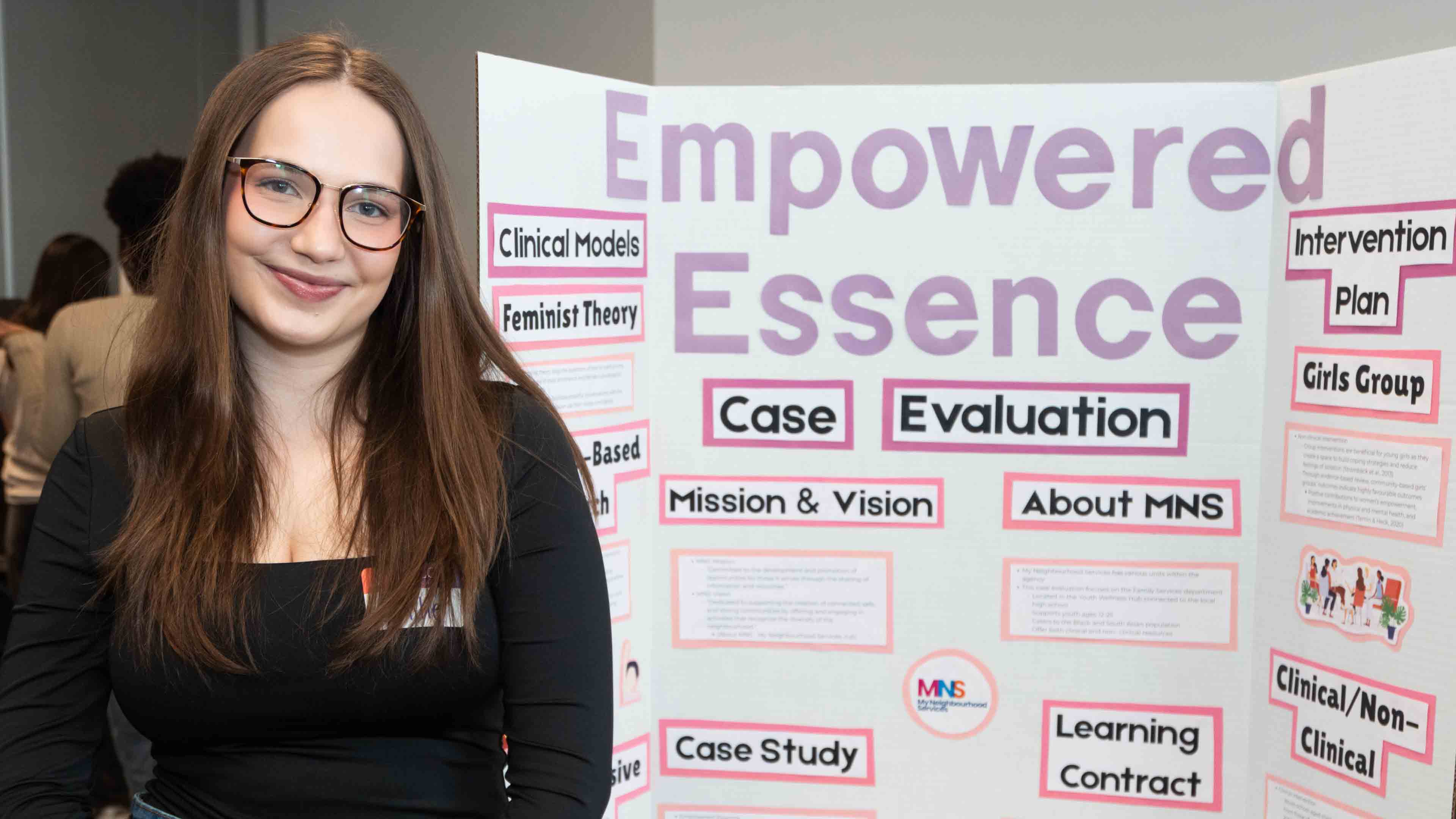
Emilie Marchand completed her placement with the Empowered Essence program at My Neighbourhood Services, which focuses on inspiring and uplifting young girls. She was immersed in the group’s mission to instill girls with confidence and the tools for self-discovery and personal growth.
The work she observed involved group support meetings and individualized cognitive behavioural therapy – with the consent of the patient.
“My Neighbourhood Services has given me the ability to combine program facilitation and one-on-one clinical and non-clinical counselling,” Marchand said. “[I’ve learned] building rapport is so important when doing clinical and non-clinical counselling. So having other placement opportunities before this one really set me up to flourish at my placement.”
Moreover, Marchand noted this has been a rewarding experience.
“It warms my heart, and I know I'm making a little bit of a difference, even if it's just one person,” she said.
Previously, she completed placements through the CSS program working with adults who have special needs and in program facilitation (assisting in successfully delivering social programs).
York Region District School Board, Cornell Village Public School
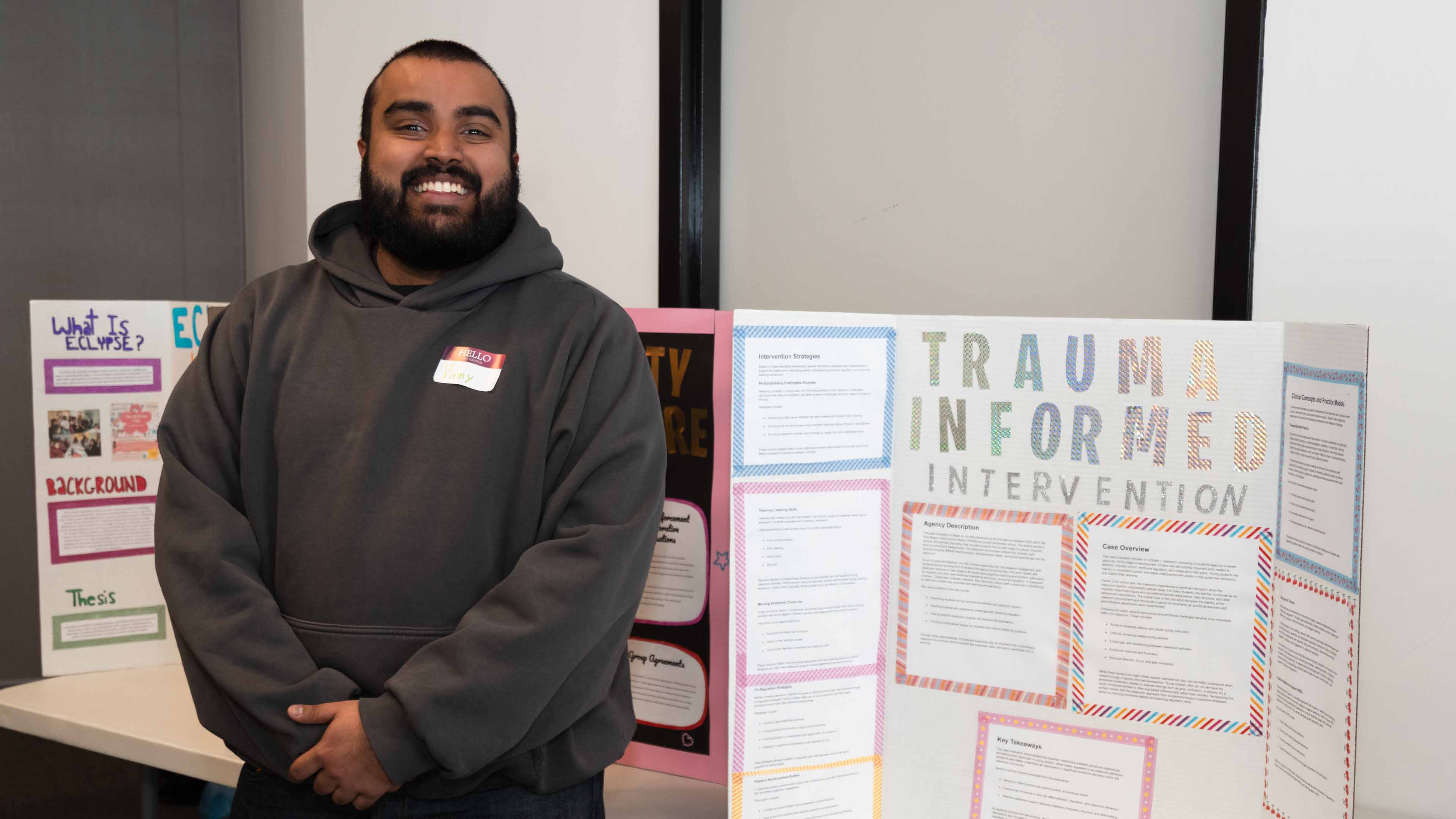
Vineet Sharma’s unique placement at Cornell Village Public School in Markham, Ont., gave him the opportunity to learn about working with children in a classroom environment who have educational exceptionalities using a trauma-informed approach.
Alongside special education assistants, Sharma worked directly with young students who experienced the unexpected challenges during the school year. His case evaluation emphasized trauma-informed practice and its role in ensuring developmental considerations for young children. Sharma dealt with students who have various exceptionalities and require emotional regulation strategies.
“The most important thing I learned [during this placement] is to be hopeful and to be understanding. Meet students where they’re at,” Sharma said.
This placement taught him to be adaptable. Shadowing educational assistants and social workers, learning how to work with individual education plans, and communicating with teachers and parents was an enriching experience.
The practicum placements Sharma has had during his time in the Guelph-Humber CSS program have guided him towards a future career in policy, where he could advocate for the voiceless, he said.
In Fall 2026, CSS will be called Social Services and Well-Being Studies (SSWS). To learn more, click here.