Sydney Lytwyn and a fellow U of GH student take on “exceptionally rare” undergraduate opportunity
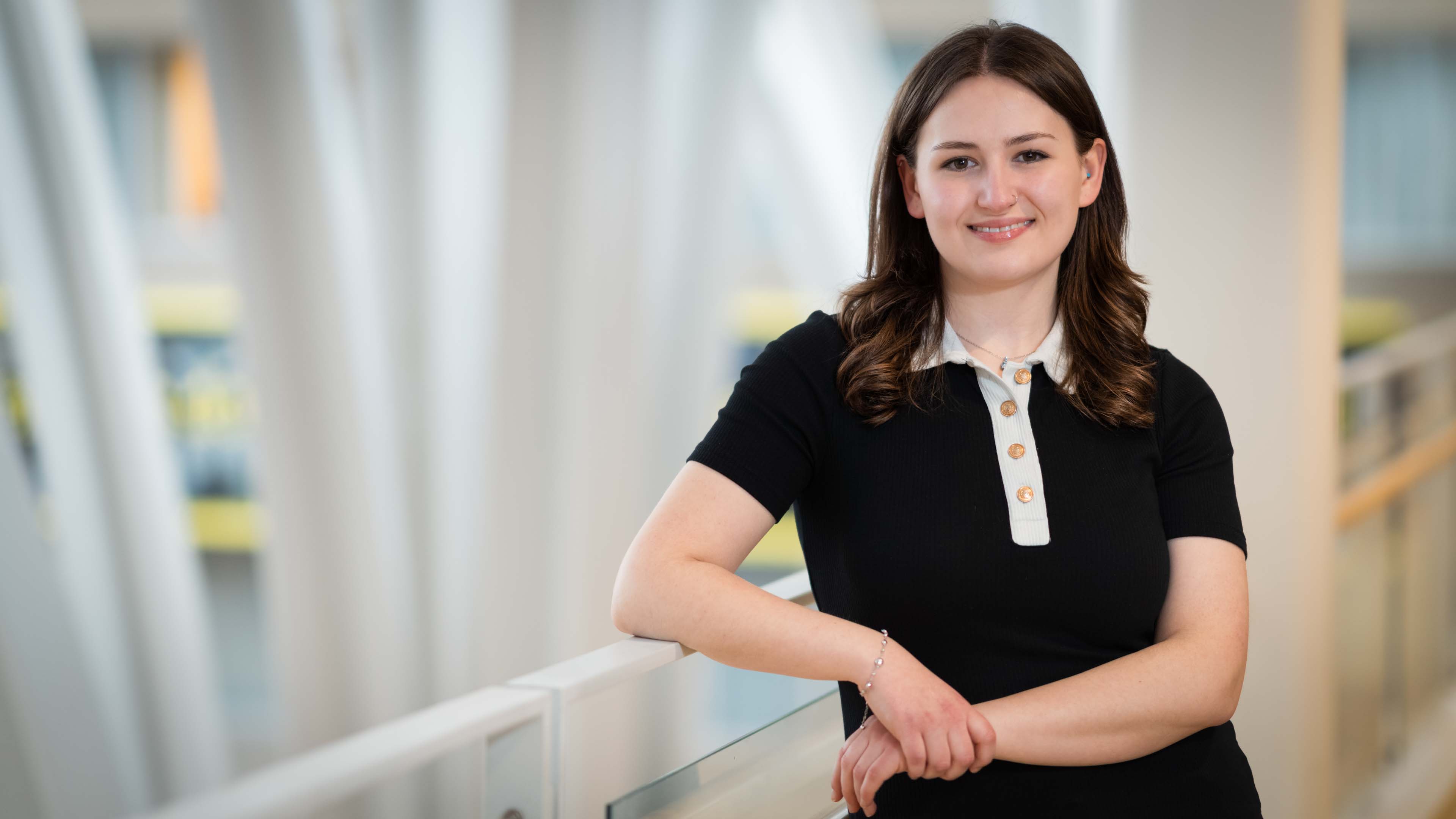
Psychology student Sydney Lytwyn is one of two University of Guelph-Humber (U of GH) students completing a notable placement with Dr. Taufik Valiante’s Neuron to Brain Laboratory at UHN’s Krembil Brain Institute this Winter semester, furthering her knowledge of neuroimaging techniques and neurodegenerative diseases. Activities for the deep brain stimulation study she was part of took place at Toronto Western Hospital.
A placement of this nature is an “exceptionally rare” opportunity for undergraduate students, U of GH Psychology Chair Dr. Alice Kim said, and the experience has enriched Lytwyn’s knowledge of the area through hands-on learning and proximity to professionals in the field.
Deep brain stimulation is a neuroimaging technique that can assist people with neurodegenerative diseases, like Parkinson’s or dystonia. The lab, which is part of University Health Network, is specifically exploring its usage for patients with Alzheimer’s Disease. Simply put, wires implanted in the brain electrically stimulate targeted brain areas. For Alzheimer’s patients, the currents stimulate parts of the brain where activity is decreasing to lessen symptoms of the disease.
Having learned of the opportunity through networking, Lytwyn applied for the placement because her psychology interests lie in learning about neurodegenerative diseases. During her placement, she shadows researchers, including neurosurgeon and Director of UHN’s Surgical Epilepsy Program, Dr. Taufik Valiante. The experience has shown her that she’s only scratched the surface learning about neuroscience. It has also helped her build confidence because of the welcoming and supportive culture within the lab.
“They have never made me feel inadequate for asking what they might think are obvious easy questions… It’s been really nice to [be in] an environment where I can feel at ease while observing this kind of professional work,” Lytwyn said.
This placement also gave her clarity about what she wants to pursue once she graduates from Guelph-Humber. It reignited her interest in neurodegenerative diseases and sparked interest in one day working in a lab like this one. Lytwyn now plans to enrol in a graduate program.
“I was on the fence about going to grad school. But this has really solidified that decision for me, especially as everybody working [at the lab] has a master’s degree at minimum,” she said.
After completing her undergraduate education, Lytwyn is considering focusing her graduate research on psychological or intersectionality contributions that might contribute to women being a main demographic to people with Alzheimer’s.
Moreover, going into this placement with a fellow U of GH student – a testament to the exceptional quality of students at the University – has also been a positive experience for Lytwyn because she feels comforted building a connection with someone who she can relate to.
To learn more about the experiences Guelph-Humber’s Psychology program could unlock, click here.