

Fourth years from U of GH team up with labs at University of Guelph, York University to expand their networks
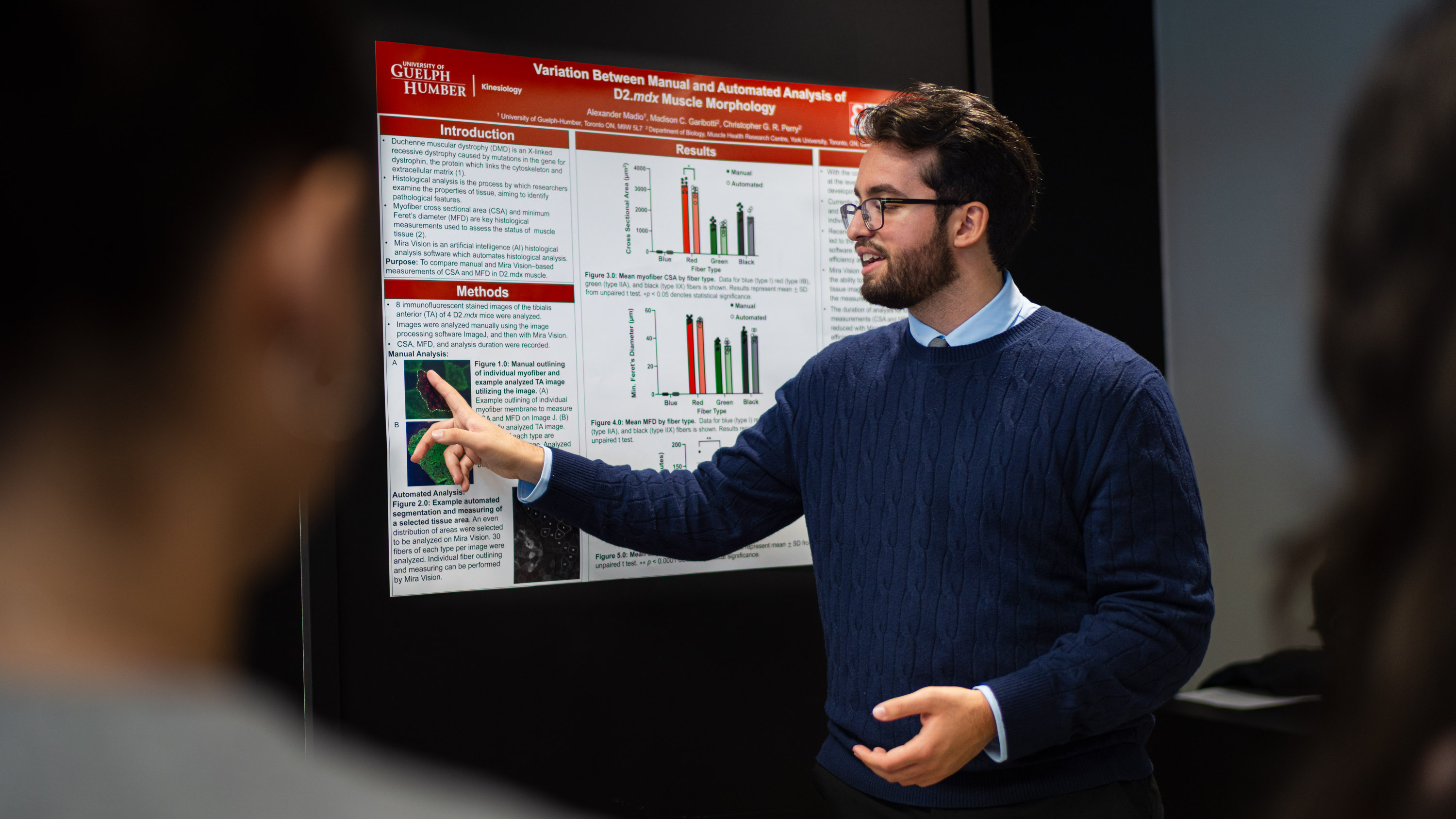
Through two semesters of intensive research, fourth-year Kinesiology students at the University of Guelph-Humber (U of GH) reached beyond the classroom to produce a major research-based thesis project, collaborating with other universities in the process as they expanded their networks beyond U of GH in a dynamic, real-world research experience.
This cross-institutional collaboration, including the University of Guelph and York University, fostered academic breakthroughs and exposed students to new lab environments. And for Jadyn Martosh and Alexander Madio, this meant having been accepted to York University’s Muscle Health Research Centre for each of their projects.
“Any opportunity to put yourself in a different environment is very beneficial and it gives you a diverse circumstance to apply some of the skills you learned already at Guelph-Humber,” Kinesiology student Alexander Madio said.
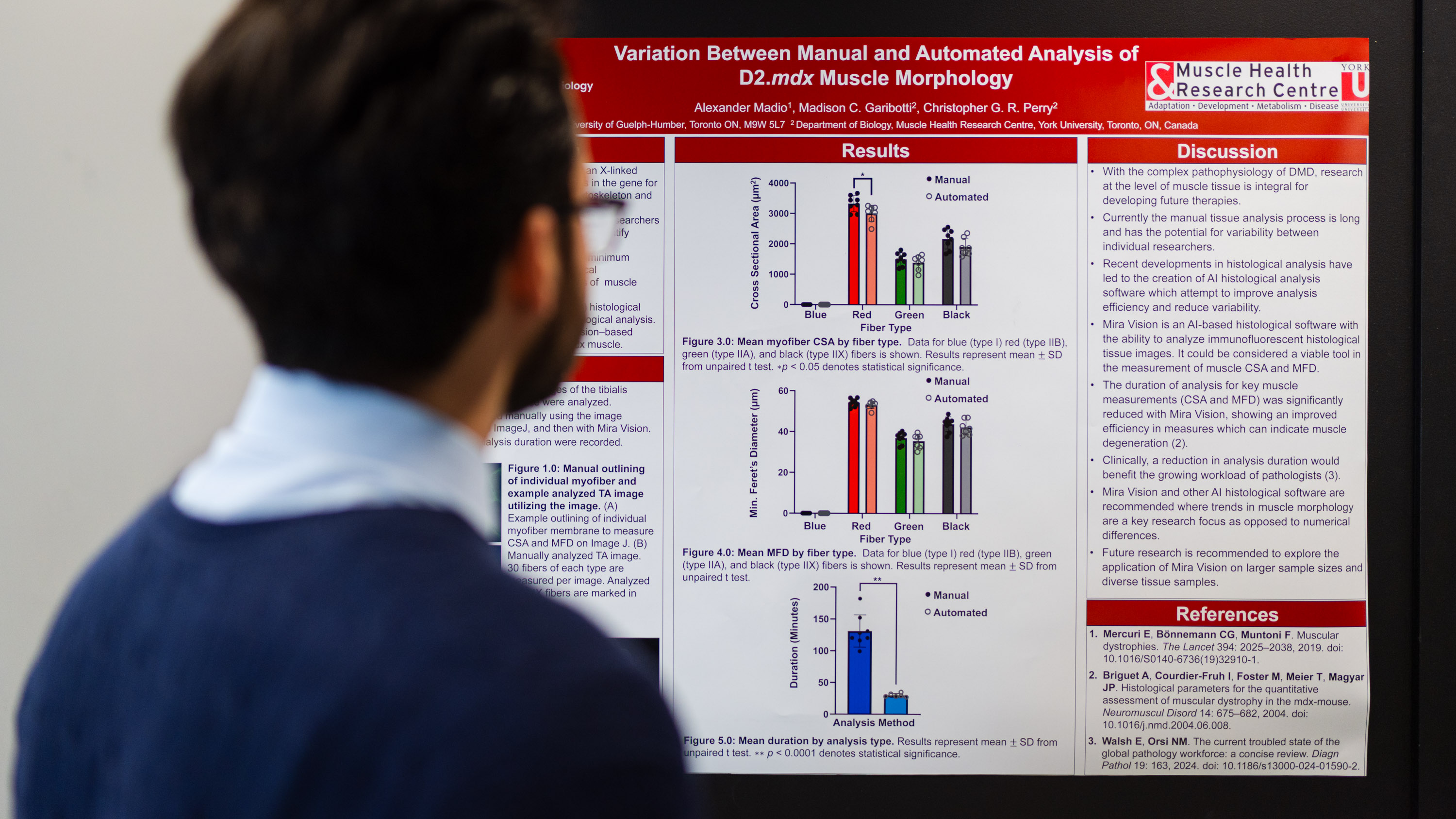
Madio’s thesis, “Variation Between Manual and Automated Analysis of D2.mdx Muscle Morphology,” focused on artificial intelligence (AI) usage when examining muscles in a lab. When researchers are analyzing the way certain treatments or conditions impact the human body, those parts are imaged and then the photos are compared, which is a time-consuming and tedious process, Madio explained.
His thesis, in partnership with researchers from the Muscle Health Research Centre, involved using an AI software that automates some of the analysis and measuring of those images to explore if it can make the process speedier, acting as a potentially helpful tool – and it is.
Meanwhile, Martosh’s thesis, “Validation of Artificial Intelligence for Quantification of Necrotic Tissue in Duchene Muscular Dystrophy,” focused on a different element of AI. Alongside Dr. Christopher Perry from the Muscle Health Research Centre, she looked at whether the AI software MiraVision was able to produce the same results as manual image analysis of muscles with Duchenne muscular dystrophy, which causes cell death in muscles. The research involved using MiraVision to examine the muscle cell death in cross sections of mice muscles to see the disease progression. Through this research, she was able to validate that AI can be as effective and reproducible as manual methods.
Their research is timely because as AI continues to advance, it’s becoming more integrated into biomedical science and health care.
“[Conducting the thesis] gives a very solid foundation of the research process, meeting individual deadlines on your own initiative, and lab-specific experience,” Madio said. “Writing [for the thesis] is helpful in improving your knowledge translation and your communication… [The poster presentation] involves skills of visual communication and translating your knowledge visually, which is very important these days, particularly with the rise of various forms of media.”
Moreover, Martosh said that she enjoyed being mentored in and exposed to a lab outside of Guelph-Humber. And for Madio, being exposed to a lab outside of Guelph-Humber allowed him to expand his knowledge in the kinesiology field by meeting experts who have different academic focus areas.
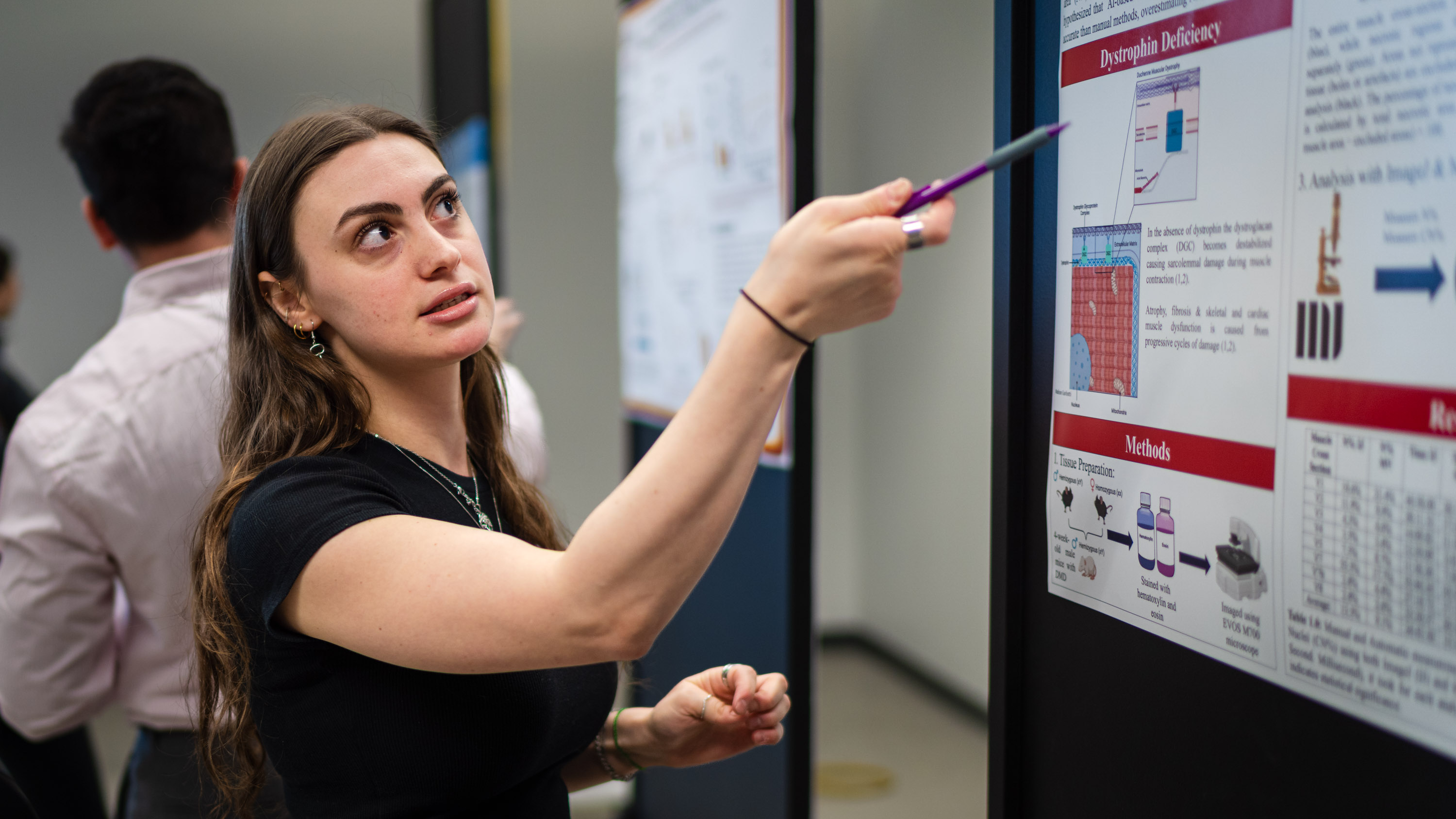
After the thesis was completed, students presented their research on posters during a conference, where members of the U of GH community visited the Kinesiology fourth years to hear about their research. This allowed the students to distill complex scientific topics into easy-to-follow conversations with others.
Madio and Martosh said their four years in the Kinesiology program prepared them well for their thesis projects. This is due to numerous practical experiences leading up to fourth year, and a strong foundation of academic courses, including in statistics, biology, and research methods, with ample opportunities to practice academic writing.
Inspiration was another positive outcome of the experience for Martosh. The thesis reaffirmed her passion for studying neuromuscular disorders, like Duchenne muscular dystrophy, and gave her a taste of what pursuing graduate studies might be like.
“Now I know what the whole [thesis] process is like and I know that I can do it,” Martosh said of the confidence she gained during the experience.
Would they recommend the thesis option to other Kinesiology students? Absolutely.
“I would definitely encourage it for students who are perhaps looking for a diverse experience, and they want something that'll give them a different challenge,” Madio said.
To explore what the University of Guelph-Humber’s Kinesiology program has to offer, click here.